
Pelvic Inflammatory Disease Treatment in Delhi
Pelvic inflammatory disease treatment in Delhi at Mediworld Fertility offers comprehensive, evidence-based care for women diagnosed with pelvic inflammatory disease (PID). Our experienced gynaecology team provides clinical evaluation, pelvic ultrasound, laboratory testing, and laparoscopy when indicated, followed by antibiotic therapy guided by current treatment guidelines. Care covers acute pelvic inflammatory disease, chronic PID, and silent forms of the condition. Because PID can affect the fallopian tubes, our integrated fertility services support women planning a future pregnancy after treatment. Patients across Delhi NCR, Gurgaon, Noida, and Faridabad turn to Mediworld Fertility for sensitive, structured care that follows recognised gynaecology and CDC guidelines. Call our clinic to book a confidential consultation today.
What Is Pelvic Inflammatory Disease (PID)?
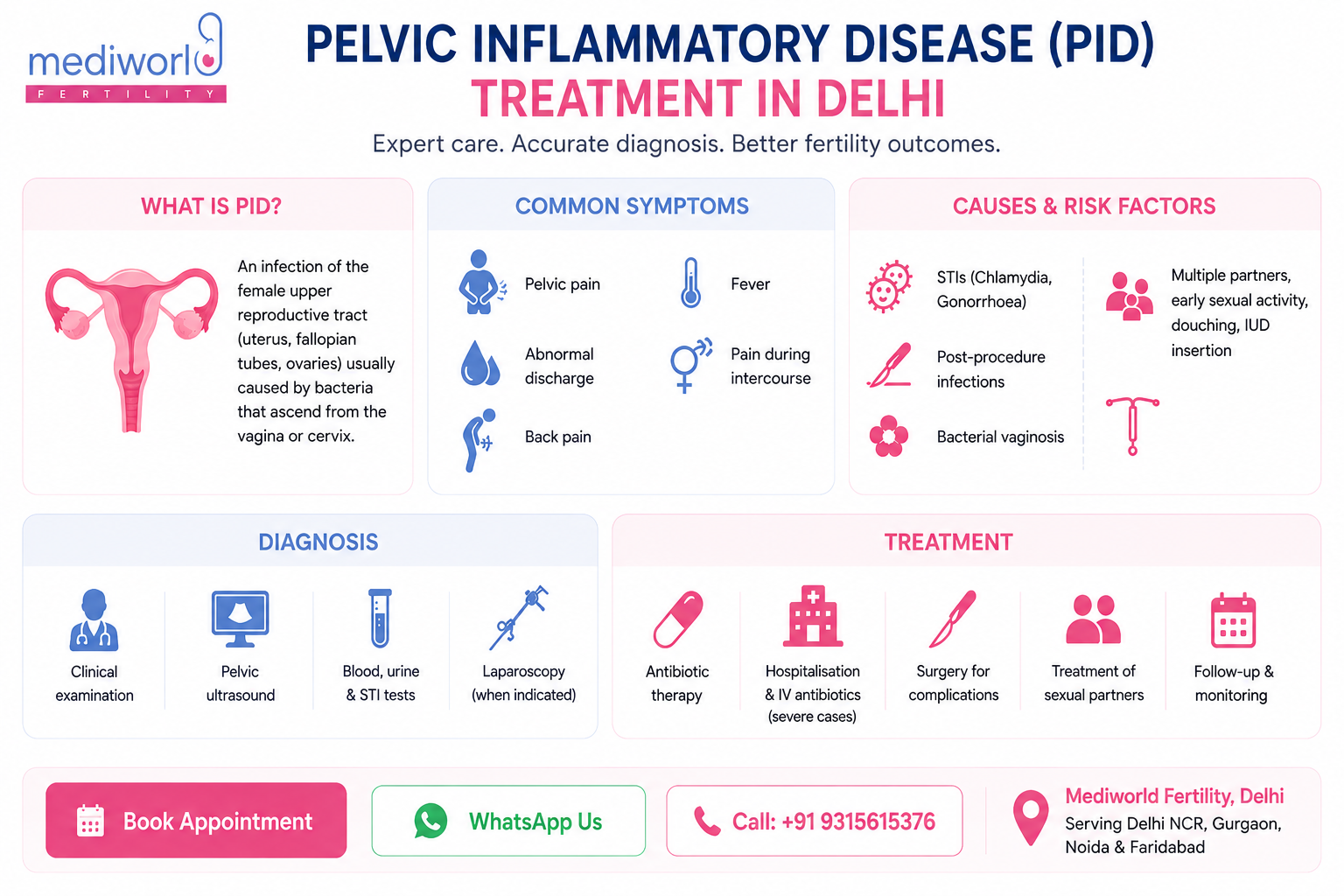
It is an infection of the female upper reproductive tract, including the uterus, fallopian tubes, and ovaries, usually caused by bacteria that ascend from the vagina or cervix. PID mainly affects women of reproductive age and requires prompt medical attention.
The meaning of pelvic inflammatory disease is broader than a single infection. The pelvic inflammatory disease definition used in gynaecology covers a spectrum of inflammatory disorders of the upper genital tract, from mild endometritis to severe tubo-ovarian abscess.
Pelvic inflammatory disease in female patients typically involves one or more of these structures:
- The endometrium (lining of the uterus)
- The fallopian tubes
- The ovaries
- The surrounding pelvic peritoneum
The condition is sometimes called pelvic inflammatory syndrome, though pelvic inflammatory disease remains the standard clinical term. It is part of the broader group of inflammatory disease conditions affecting the reproductive system, and is most common in sexually active women aged 15 to 35.
Get Expert Guidance for Your Fertility Journey
Take the next step with Mediworld Fertility. Connect with our team to book your consultation.
 WhatsApp Us

Types of Pelvic Inflammatory Disease
There are three main types of pelvic inflammatory disease: acute, chronic, and subclinical or silent PID. Each presents differently and needs a slightly different approach to treatment. Recognising the type helps the gynaecologist plan the right course of antibiotics, follow-up, and any fertility evaluation.
Acute Pelvic Inflammatory Disease
Acute pelvic inflammatory disease is the most clearly recognisable form, with symptoms appearing over days to a few weeks. Acute pelvic inflammatory disease symptoms often include lower abdominal pain, fever, abnormal vaginal discharge, and pain during intercourse. Prompt antibiotic treatment usually resolves the infection if started early.
Chronic Pelvic Inflammatory Disease
Chronic pelvic inflammatory disease develops when an earlier infection was incompletely treated or recurred. Chronic pelvic inflammatory disease symptoms include long-standing pelvic discomfort, irregular periods, and sometimes infertility. Management combines antibiotic care, pain support, and evaluation for tubal damage.
Subclinical or Silent PID
Subclinical PID occurs without obvious symptoms. Many women only learn of a past episode during a fertility workup. Although silent, this form can still scar the fallopian tubes, making routine gynaecological screening important.
Reach Out for Expert Care
Causes and Risk Factors of Pelvic Inflammatory Disease
Pelvic inflammatory disease causes are most commonly bacterial infections that ascend from the lower genital tract. Sexually transmitted infections such as chlamydia and gonorrhoea are the leading triggers. Post-procedure infections, bacterial vaginosis, and certain risk factors increase susceptibility.
Sexually Transmitted Infections
Chlamydia and gonorrhoea account for a significant share of pelvic inflammatory disease causes globally. The pathophysiology of pelvic inflammatory disease typically involves bacterial migration through the cervix, followed by inflammation of the endometrium, fallopian tubes, and adjacent structures.
Post-Procedure Infections
Procedures involving the uterus can occasionally allow bacteria to enter the upper tract. Pelvic inflammatory disease PID causes in this group include:
- Post-delivery and post-abortion infections
- Insertion of an IUD in the early weeks after placement
- Diagnostic procedures such as dilation and curettage
IUD pelvic inflammatory disease symptoms are most common in the first three weeks after insertion and include pelvic pain, fever, and unusual discharge.
Bacterial Vaginosis and Ascending Infections
Bacterial imbalance in the vagina, particularly bacterial vaginosis, can create conditions that allow infection to ascend. Recurrent untreated vaginal infections are an important and often overlooked contributor.
Risk Factors That Increase Susceptibility
The main pelvic inflammatory disease risk factors include:
- Age under 25 and early sexual activity
- Multiple sexual partners
- Previous episode of PID or STI
- Douching, which disturbs natural vaginal flora
- Recent IUD insertion
- Unprotected intercourse
Asking what is the main cause of pelvic inflammatory disease usually leads back to untreated STIs, which is why screening and prompt care matter.
Signs and Symptoms of Pelvic Inflammatory Disease
Pelvic inflammatory disease symptoms vary widely. Some women have only mild discomfort, while others experience clear and distressing signs. Common features include pelvic pain, abnormal discharge, and discomfort during intercourse. Recognising the signs of pelvic inflammatory disease early supports timely treatment.
The signs and symptoms of pelvic inflammatory disease are best understood by severity, and what are the symptoms of pelvic inflammatory disease is one of the most commonly searched patient questions.
In the early stage, pelvic inflammatory disease early symptoms can be subtle. Women may notice mild lower abdominal discomfort, a change in vaginal discharge, light spotting between periods, or mild pain during intercourse. These features are easy to dismiss but should not be ignored.
In the classic stage, more recognisable features emerge. Pelvic inflammatory disease pain in the lower abdomen, fever, painful urination, irregular menstrual bleeding, deep pain during intercourse, and pelvic inflammatory disease symptoms back pain are all reported. On examination, the chandelier sign pelvic inflammatory disease check, which is extreme tenderness when the cervix is gently moved, is one of the classic findings.
In the severe stage, urgent care is needed. Symptoms include high-grade fever, severe lower abdominal pain, vomiting, or signs of pelvic abscess. Pelvic inflammatory disease symptoms after menopause are uncommon but can occur after gynaecological procedures and warrant prompt evaluation.
Diagnosis of Pelvic Inflammatory Disease at Mediworld Fertility, Delhi
Pelvic inflammatory disease diagnosis at Mediworld Fertility combines clinical examination, pelvic ultrasound, laboratory testing, and laparoscopy when indicated. Because no single test confirms PID, gynaecologists rely on a careful combination of history, examination findings, and investigations to make a pelvic inflammatory disease clinical diagnosis.
Clinical Examination
The first step is a detailed history and gynaecological examination. The gynaecologist checks for lower abdominal tenderness, cervical motion tenderness, and adnexal tenderness.
Pelvic Ultrasound and Imaging
A common patient question is, does pelvic inflammatory disease show on ultrasound? Pelvic ultrasound can reveal thickened fallopian tubes, fluid in the pelvis, or a tubo-ovarian abscess. While ultrasound may appear normal in mild cases, it remains an important imaging tool.
Laboratory Tests
Laboratory work supports the diagnosis and helps identify the causative organism. The pelvic inflammatory disease diagnostic test workup typically includes:
- Pelvic inflammatory disease blood test with CBC, CRP, and ESR
- Pelvic inflammatory disease urine test to rule out UTI
- Vaginal and cervical swabs for chlamydia and gonorrhoea
- A pelvic inflammatory disease test for STI screening
Laparoscopy
In selected cases, laparoscopy pelvic inflammatory disease evaluation gives a direct view of the fallopian tubes and pelvic organs. This may be considered when the diagnosis is uncertain, when symptoms are not improving, or when a tubo-ovarian abscess is suspected.
Pelvic Inflammatory Disease Treatment Options in Delhi
Pelvic inflammatory disease treatment is centred on prompt antibiotic therapy, hospitalisation for severe cases, surgical care when complications develop, and treatment of sexual partners. Mediworld Fertility follows current pelvic inflammatory disease treatment guidelines including Indian gynaecology recommendations and CDC standards.
Antibiotic Therapy
The cornerstone of care is appropriate antibiotic treatment. Pelvic inflammatory disease antibiotics are typically started promptly once the clinical diagnosis is made. Medication for pelvic inflammatory disease is selected to cover the most common causative organisms.
What antibiotics treat pelvic inflammatory disease depends on severity. Standard regimens based on the pelvic inflammatory disease CDC guidelines typically combine:
- A cephalosporin to cover gonorrhoea
- Doxycycline for chlamydia
- Metronidazole for anaerobic coverage
Pelvic inflammatory disease treatment antibiotics are continued for the full prescribed course, usually 14 days, even if symptoms improve earlier.
Hospitalisation and IV Antibiotics
Acute pelvic inflammatory disease with severe symptoms, pregnancy, suspected abscess, or failure to respond to oral therapy may need inpatient care. The management of pelvic inflammatory disease in hospital includes intravenous antibiotics, fluid support, pain control, and close monitoring. Medical management of pelvic inflammatory disease transitions to oral antibiotics once the patient is clinically stable.
Surgical Management
Pelvic inflammatory disease surgery is reserved for specific situations:
- Drainage of a tubo-ovarian abscess
- Persistent symptoms despite optimal antibiotic care
- Suspected rupture of an abscess
Laparoscopy pelvic inflammatory disease procedures allow drainage and lavage of the pelvis with minimal recovery time. Chronic pelvic inflammatory disease treatment occasionally involves surgery when adhesions cause ongoing symptoms.
Treatment of Sexual Partners
Treating sexual partners is an essential part of management. Any partner from the preceding 60 days should be evaluated and treated for STIs, even if asymptomatic, to prevent reinfection.
Follow-Up and Monitoring
A common concern is whether there is a pelvic inflammatory disease cure. With timely, complete treatment, most acute cases can be effectively resolved, though the risk of tubal scarring remains. The full pelvic inflammatory disease PID treatment plan includes a review at 48 to 72 hours, completion of the antibiotic course, and a follow-up visit. This is the structured pathway we follow for pelvic inflammatory disease treatment in Delhi.
Reach Out for Expert Care
PID and Fertility – What You Need to Know
A common patient question is, can pelvic inflammatory disease cause infertility? Yes, pelvic inflammatory disease can cause infertility in some women, particularly when treatment is delayed or infections recur. Early diagnosis and complete antibiotic care may help preserve fertility.
The link between pelvic inflammatory disease infertility and tubal damage is well established. Inflammation of the fallopian tubes can lead to scarring, partial blockage, or complete occlusion. Damaged tubes also raise the risk of ectopic pregnancy.
The complications of pelvic inflammatory disease that most directly affect fertility include:
- Tubal scarring and blockage
- Increased risk of ectopic pregnancy
- Pelvic adhesions affecting normal anatomy
For women planning pregnancy after a confirmed episode, a structured fertility evaluation may help. At Mediworld Fertility, options include:
- Hysterosalpingography (HSG) to assess tubal patency
- Diagnostic laparoscopy in selected cases
- Hormonal and ovarian reserve testing
Pelvic inflammatory disease in pregnancy is uncommon and any suspected case needs immediate specialist care. Pregnancy after pelvic inflammatory disease is possible for many women, and timely treatment improves the chance of natural conception. When natural conception is delayed, assisted reproductive options such as IVF can be discussed. Outcomes vary from person to person, and our team provides honest, individualised guidance after a complete evaluation.
Complications of Untreated Pelvic Inflammatory Disease
Untreated or partially treated PID can lead to serious long-term problems. The complications of pelvic inflammatory disease include chronic pelvic pain, tubo-ovarian abscess, ectopic pregnancy, infertility, and recurrent infection. Early treatment significantly reduces the risk of these outcomes.
The most important complications to be aware of are listed below.
- Chronic pelvic pain: persistent pelvic inflammatory disease pain can affect daily life and emotional wellbeing
- Tubo-ovarian abscess: may require hospitalisation, IV antibiotics, and drainage
- Ectopic pregnancy: scarred tubes raise the risk of pregnancy implanting outside the uterus
- Infertility: chronic pelvic inflammatory disease is a well-recognised cause of tubal-factor infertility; pelvic inflammatory disease PID is a major complication of untreated STIs
- Recurrent infection: women who have had PID once are at higher risk of future episodes
Most of these outcomes are preventable with timely diagnosis, complete antibiotic treatment, and follow-up care.
Prevention of Pelvic Inflammatory Disease
Prevention of pelvic inflammatory disease focuses on reducing the risk of sexually transmitted infections and addressing vaginal infections promptly. Safer sexual practices, regular STI screening, and timely gynaecological care are the most effective prevention strategies.
Practical steps for prevention of pelvic inflammatory disease and answering how to prevent pelvic inflammatory disease PID include:
- Using condoms consistently and correctly
- Routine STI screening for sexually active women, particularly under 25
- Early treatment of any vaginal infection or unusual discharge
- Limiting the number of sexual partners
- Avoiding vaginal douching
- Seeking prompt evaluation if symptoms develop after a gynaecological procedure
- Ensuring partners are tested and treated when an STI is diagnosed
Addressing modifiable pelvic inflammatory disease risk factors is one of the most effective ways to protect long-term fertility.
Why Choose Mediworld Fertility for Pelvic Inflammatory Disease Treatment in Delhi
Mediworld Fertility offers structured, guideline-based pelvic inflammatory disease treatment delivered by experienced gynaecologists and supported by in-house diagnostics and integrated fertility services. Women across Delhi NCR choose our team for pelvic inflammatory disease treatment in Delhi because of our calm, confidential, and evidence-based approach.
Here is what defines the care experience at our clinic.
Experienced gynaecology team
- Senior gynaecologists with training in reproductive infections
- Experienced pelvic inflammatory disease specialists managing acute and chronic forms
- Care aligned with Indian gynaecology and CDC guidelines
In-house diagnostics
- Pelvic ultrasound on site
- Pathology and microbiology support
- STI screening with prompt reporting
Integrated fertility evaluation
- Hysterosalpingography (HSG) for tubal assessment
- Diagnostic laparoscopy where indicated
- IVF and assisted reproduction services for women planning pregnancy
Confidential, multilingual care
- Consultations available in Hindi and English
- Sensitive, judgement-free environment
- Detailed counselling for patients and partners
Clinic and contact
- Mediworld Fertility, Delhi
- Convenient access for patients across Delhi NCR
- Reach our team by phone to schedule a consultation
If you have been diagnosed with PID or are experiencing symptoms that concern you, the team at Mediworld Fertility is here to provide confidential, evidence-based pelvic inflammatory disease treatment in Delhi. Our experienced pelvic inflammatory disease specialists offer accurate diagnosis, structured antibiotic care, and onward fertility evaluation when needed. Book a consultation by calling Mediworld Fertility, Delhi. Serving patients across Delhi NCR, Gurgaon, Noida, and Faridabad with sensitive, guideline-based pelvic inflammatory disease treatment in Delhi.
Frequently Asked Questions
Q1. What is pelvic inflammatory disease?
Pelvic inflammatory disease is an infection of the female upper reproductive tract, including the uterus, fallopian tubes, and ovaries. It is most often caused by bacteria that ascend from the cervix and vagina, and it requires prompt medical evaluation and antibiotic treatment.
Q2. Can pelvic inflammatory disease be cured?
With timely diagnosis and complete antibiotic treatment, most cases of acute PID can be effectively resolved. The risk of tubal scarring remains, particularly with repeated episodes, which is why structured follow-up is part of pelvic inflammatory disease treatment in Delhi at Mediworld Fertility.
Q3. Can pelvic inflammatory disease cause infertility?
Yes, PID can cause infertility, particularly when treatment is delayed or when infections recur. Damage to the fallopian tubes is the main reason. Early diagnosis and complete care may help preserve fertility, and a fertility evaluation is advised for women planning pregnancy after PID.
Q4. What antibiotics treat pelvic inflammatory disease?
Standard treatment combines a cephalosporin for gonorrhoea, doxycycline for chlamydia, and metronidazole for anaerobic bacteria, in line with CDC and Indian gynaecology guidelines. The full course must be completed, even if pelvic inflammatory disease symptoms improve earlier.
Q5. How is PID diagnosed?
Pelvic inflammatory disease diagnosis combines clinical examination, pelvic ultrasound, blood and urine tests, and STI screening. In selected cases, diagnostic laparoscopy is used to confirm the diagnosis or assess the extent of pelvic involvement, particularly in chronic pelvic inflammatory disease.
Q6. Can you get pregnant after PID?
Pregnancy after pelvic inflammatory disease is possible for many women, especially when the condition is diagnosed and treated early. A fertility evaluation including tubal assessment helps plan the next steps, and assisted reproductive options are available if natural conception is delayed.

Dr. Neha Gupta's Medical Content Team
Dr. Neha Gupta’s medical content team specialises in creating accurate, clear, and patient-focused healthcare content. With strong clinical understanding and expertise in technical writing and SEO, the team translates complex medical information into reliable, accessible resources that support informed decisions and uphold Dr. Neha Gupta’s commitment to quality care.
Dr. Neha Gupta
Dr. Neha Gupta is an experienced fertility specialist, IVF expert, and senior gynecologist with 21+ years in reproductive medicine. She has successfully treated 2000+ couples using advanced IVF, ICSI, IUI, donor programs, and fertility preservation techniques.