
Ovulation Induction in Delhi – Helping You Ovulate at the Right Time
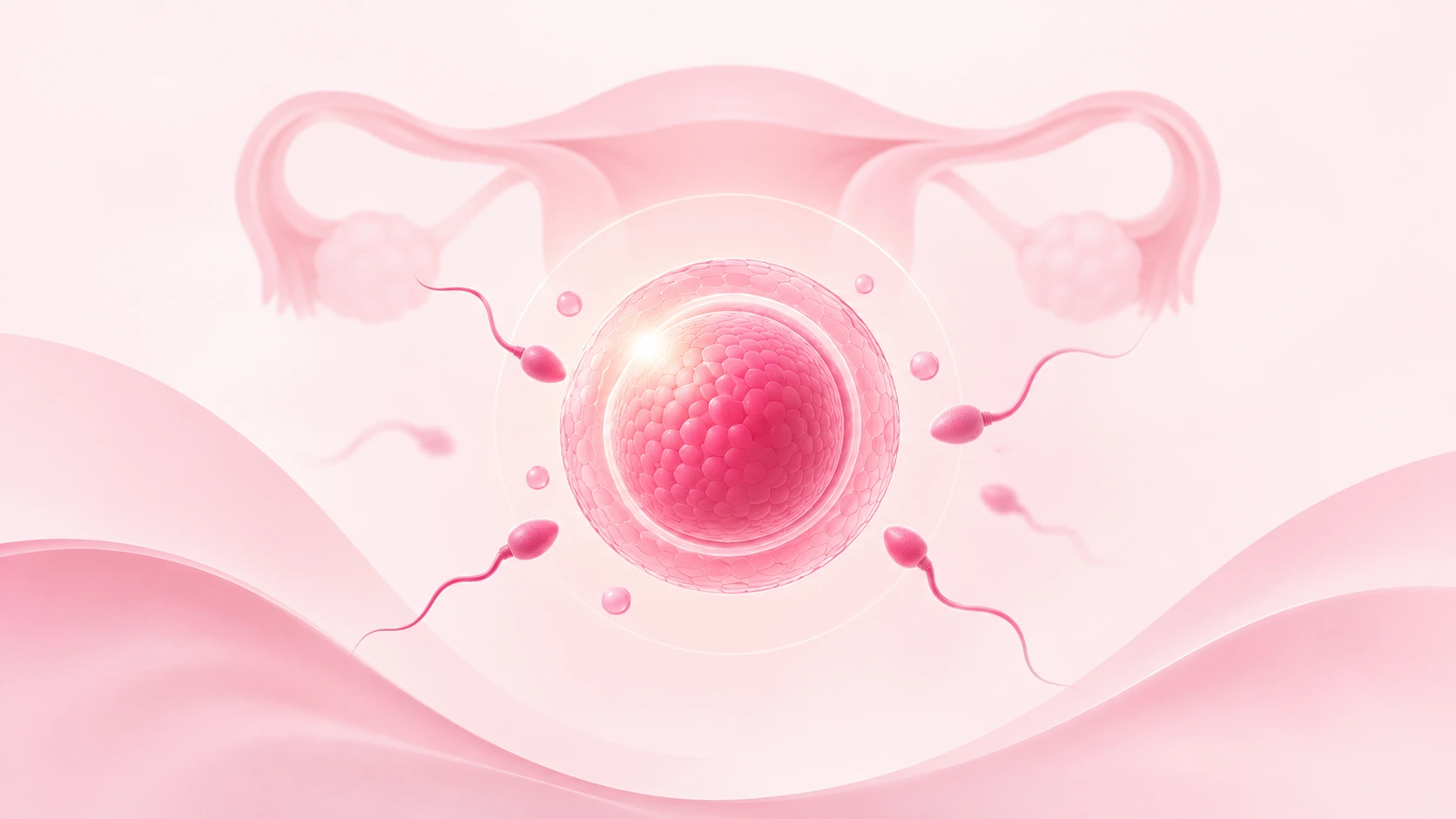
Ovulation induction in Delhi uses oral or injectable medications – Clomiphene Citrate, Letrozole, and Gonadotropins – to trigger regular egg release in women with PCOS, irregular periods, or unexplained infertility. Monitored with serial ultrasound, per-cycle pregnancy rates reach 40–45%, with costs starting at ₹3,500+.
What Is Ovulation Induction? (and Why Do Some Women Need It?)
Every month, a healthy cycle follows a predictable rhythm – the brain signals the ovaries, a follicle grows, and around Day 14 it releases a mature egg. When sperm is present, conception becomes possible. But for many women, this process breaks down somewhere along the way. The follicle grows but never releases the egg, or the signal never goes out properly. The result: irregular or absent periods, and real difficulty getting pregnant.
Ovulation induction treatment is the medical fix. It uses carefully chosen medications to either kickstart ovulation in women who aren’t ovulating at all, or to regulate it in women who ovulate unpredictably.
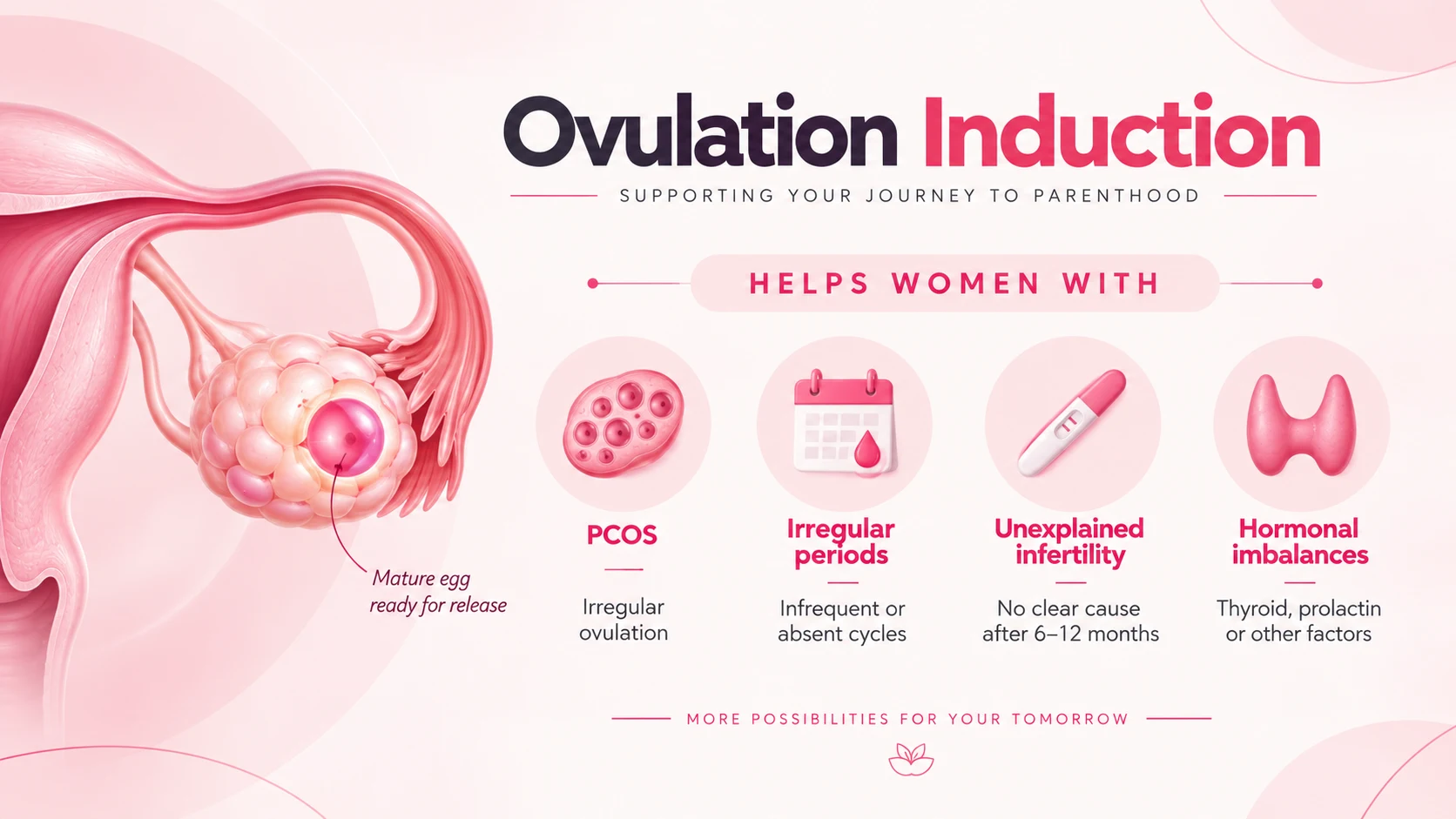
The most common reasons women need it:
- PCOS: The hormonal disruption that defines PCOS directly interferes with ovulation. PCOS ovulation induction is one of the most frequent treatments we manage.
- Irregular periods: Cycles shorter than 21 days or longer than 35 days – or simply unpredictable ones – respond well to ovulation induction treatment.
- Unexplained infertility: When all tests come back normal but pregnancy hasn’t happened after 12 months of trying, ovulation induction for unexplained infertility is usually the first step a specialist recommends.
- Hormonal imbalances: Thyroid disorders, high prolactin, or low body weight can all block ovulation.
For most of these conditions, ovulation induction treatment is non-surgical, straightforward, and highly effective when properly monitored.
Get Expert Guidance for Your Fertility Journey
Take the next step with Mediworld Fertility. Connect with our team to book your consultation.
 WhatsApp Us

Who Is a Good Candidate for Ovulation Induction in Delhi?
Ovulation induction in Delhi suits a wider range of patients than many people realise. You’re likely a good candidate if you have PCOS or PCOD and aren’t ovulating regularly, if your periods are very infrequent or absent, or if you’ve been trying to conceive for 6–12 months with no structural problem found on investigation.
It’s also a strong option if your partner has mild male-factor infertility – in that case, IUI with ovulation induction is often the recommended combination. And if you’re preparing for an IUI cycle, confirmed and timed ovulation is essential.
Ovulation induction is generally not recommended if both fallopian tubes are blocked, if you have severe endometriosis, or if your partner’s sperm count is very low – situations where IVF or ICSI would be more appropriate. A thorough evaluation at Mediworld, including blood tests, ultrasound, and semen analysis, confirms the right path for you.
Reach Out for Expert Care
Ovulation Induction Medications – What Will You Take?
Most ovulation induction medications are simple tablets taken for just five days. The injections, when needed, are small and very manageable. Here’s what each option does and who it’s best for.
- Clomiphene Citrate (Clomid / Siphene) has been used safely for over 50 years. Taken orally from Day 2 to Day 6 of your cycle, it works by prompting the brain to release more FSH, which tells the ovaries to grow a follicle. Around 70–80% of women respond, making clomiphene citrate for ovulation the classic first step for irregular cycles, mild PCOS, and unexplained infertility.
- Letrozole (Femara) is now the preferred choice for PCOS. Research published in Human Reproduction and endorsed by ASRM guidelines shows letrozole for ovulation achieves ovulation rates of ~88.5% versus ~76.6% with Clomiphene, with better pregnancy rates and a lower multiple-pregnancy risk (~5%). It works by temporarily lowering oestrogen to trigger a stronger FSH surge, and is taken orally on Day 2–6.
- Gonadotropins are injectable FSH or FSH+LH hormones – brands like Gonal-F, Menopur, and Recagon – given as small subcutaneous injections from Day 2 or 3. Gonadotropins for ovulation directly stimulate the ovaries, making them more powerful than oral tablets. They’re used when oral medications haven’t worked, or when controlled ovarian stimulation is needed for IUI or IVF. More frequent monitoring is required to prevent over-stimulation.
- Metformin isn’t a fertility drug in the traditional sense – it’s an insulin-sensitiser. For women with PCOS and insulin resistance, Metformin can restore regular ovulation on its own, or make Letrozole and Clomiphene work more effectively when combined.
The Ovulation Induction Process – Step by Step
The ovulation induction process spans one menstrual cycle – roughly 14–18 days from start to finish.
- Step 1 – Baseline Assessment (Day 1–2): Before any medication starts, we do a transvaginal ultrasound to check your ovaries and uterine lining, plus blood tests for FSH, LH, oestradiol, AMH, and thyroid function. This tells us your starting point and guides the right medication choice.
- Step 2 – Medication & Stimulation (Day 2–6 or Day 2–10): You take your prescribed medication – tablets, injections, or both – exactly as directed. This is the stimulation phase, where controlled ovarian stimulation encourages the ovaries to grow one or more follicles. The goal is 1–3 good-quality follicles without over-stimulating.
- Step 3 – Follicular Monitoring (Day 8–12 onwards): Follicular monitoring in Delhi is essential here. You’ll come in for 2–4 ultrasound scans so we can measure the growing follicle(s). We’re looking for a dominant follicle to reach 18–20 mm – the sign that the egg inside is mature and ready for release.
- Step 4 – HCG Trigger & Timed Intercourse or IUI (Day 12–16): Once the follicle is ready, an HCG trigger injection causes the egg to release approximately 36–40 hours later. If you’re doing timed intercourse after ovulation induction, we advise intercourse on specific days around the trigger. If you’re doing IUI with ovulation induction, prepared sperm is placed directly into the uterus around 36 hours after the trigger. A pregnancy test follows 14–16 days later.
Ovulation Induction Success Rates – What to Expect
The ovulation induction success rate for pregnancy per cycle is approximately 40–45% when treatment is well-monitored and the patient is a good candidate – consistent with what multiple clinical studies report and what we see in practice at Mediworld.
Age matters significantly: women under 35 have notably higher rates, and success declines after 37. The underlying cause also shapes outcomes – PCOS ovulation induction responds very well, while tubal blockage or severe male-factor infertility does not. Most fertility specialists, including our team, recommend 3 to 6 monitored cycles before reassessing; around 75% of pregnancies with Clomiphene happen within the first three cycles. If conception hasn’t occurred after 3–6 well-monitored cycles, it’s usually time to discuss IUI or IVF.
Risks and Side Effects – What You Should Know
Ovulation induction is one of the safest fertility treatments available. Understanding the risks means you’ll never be caught off guard.
- OHSS (Ovarian Hyperstimulation Syndrome) is the most important risk to know about. The OHSS risk with ovulation induction is low with oral medications but rises with Gonadotropin injections, particularly in women with PCOS who tend to be high responders. When the ovaries are over-stimulated, they can become swollen and painful – causing bloating, nausea, pelvic pressure, and in rare severe cases, fluid accumulation in the abdomen or difficulty breathing. If symptoms feel worse day by day after your trigger injection, call us immediately. The RCOG classifies OHSS into mild, moderate, and severe grades; most cases seen with ovarian stimulation in Delhi are mild and resolve within a week.
- Multiple pregnancy is possible because ovulation induction can cause more than one follicle to release an egg. The risk is around 5% with Letrozole, 10% with Clomiphene, and up to 20% with Gonadotropins. We monitor follicle growth carefully and will advise cycle cancellation if too many follicles develop – a safety measure, not a setback.
- Mild side effects – hot flashes, bloating, mood swings, and brief breast tenderness – are common with oral medications and typically resolve within a few days of finishing the course.
Ovulation Induction Cost in Delhi
Here’s a transparent breakdown of what ovulation induction costs at Mediworld Fertility in Delhi:
| Treatment | Estimated Cost per Cycle |
| Basic OI with oral medications (Clomiphene / Letrozole) | ₹3,500 – ₹14,000+ |
| OI with Gonadotropin injections | ₹18,000 – ₹35,000+ |
| Follicular monitoring (serial ultrasound scans) | ₹4,000 – ₹8,000+ |
| HCG trigger injection | ₹2,500 – ₹4,500+ |
| OI combined with IUI | ₹22,000 – ₹45,000+ |
| Controlled ovarian stimulation (IVF-linked) | ₹1,10,000 – ₹1,40,000+ |
All costs are indicative and may vary based on your individual protocol. A detailed cost breakdown is provided after your first consultation.
Disclaimer: Prices shown are estimates. Final pricing depends on your diagnosis, medication response, and number of monitoring scans required.
The ovulation induction cost in Delhi varies across clinics. What matters most isn’t just the price – it’s what’s included. At Mediworld, follicular monitoring, trigger injection guidance, and post-cycle review are all part of your treatment plan, not add-ons billed separately.
Why Choose Mediworld Fertility for Ovulation Induction in Delhi?
Dr. Neha Gupta – 21+ Years of Fertility Expertise. Dr. Gupta brings over 21 years in reproductive medicine, has personally overseen 6,000+ IVF cycles, and is an Executive Member of the Indian Fertility Society (IFS). She reviews every ovulation induction case personally and designs each protocol herself.
- Personalised medication protocols. Your AMH level, antral follicle count, BMI, previous cycle response, and diagnosis all shape the plan we build for you. A woman with PCOS and insulin resistance gets a very different protocol than a woman with unexplained infertility.
- High-resolution follicular monitoring. Our in-house ultrasound suite measures follicle size, count, and uterine lining thickness at every scan – giving us the precision to time your trigger injection accurately.
- In-house embryology and andrology lab. If your treatment progresses to IUI or IVF, everything happens under one roof – no sample transfers, no delays, consistent quality control throughout.
- Transparent pricing, no hidden costs. You receive a written cost estimate after your first consultation. No surprise bills. No undisclosed add-on fees. Ovarian stimulation in Delhi shouldn’t come with financial stress on top of emotional stress.
Holistic, whole-person care. Alongside your medical protocol, we offer diet and nutrition counselling, emotional support, and lifestyle guidance – because stress, sleep, and diet genuinely affect ovulation and treatment outcomes.

Dr. Neha Gupta's Medical Content Team
Dr. Neha Gupta’s medical content team specialises in creating accurate, clear, and patient-focused healthcare content. With strong clinical understanding and expertise in technical writing and SEO, the team translates complex medical information into reliable, accessible resources that support informed decisions and uphold Dr. Neha Gupta’s commitment to quality care.
Dr. Neha Gupta
Dr. Neha Gupta is an experienced fertility specialist, IVF expert, and senior gynecologist with 21+ years in reproductive medicine. She has successfully treated 2000+ couples using advanced IVF, ICSI, IUI, donor programs, and fertility preservation techniques.