
Thyroid and Fertility: How Thyroid Affects Getting Pregnant
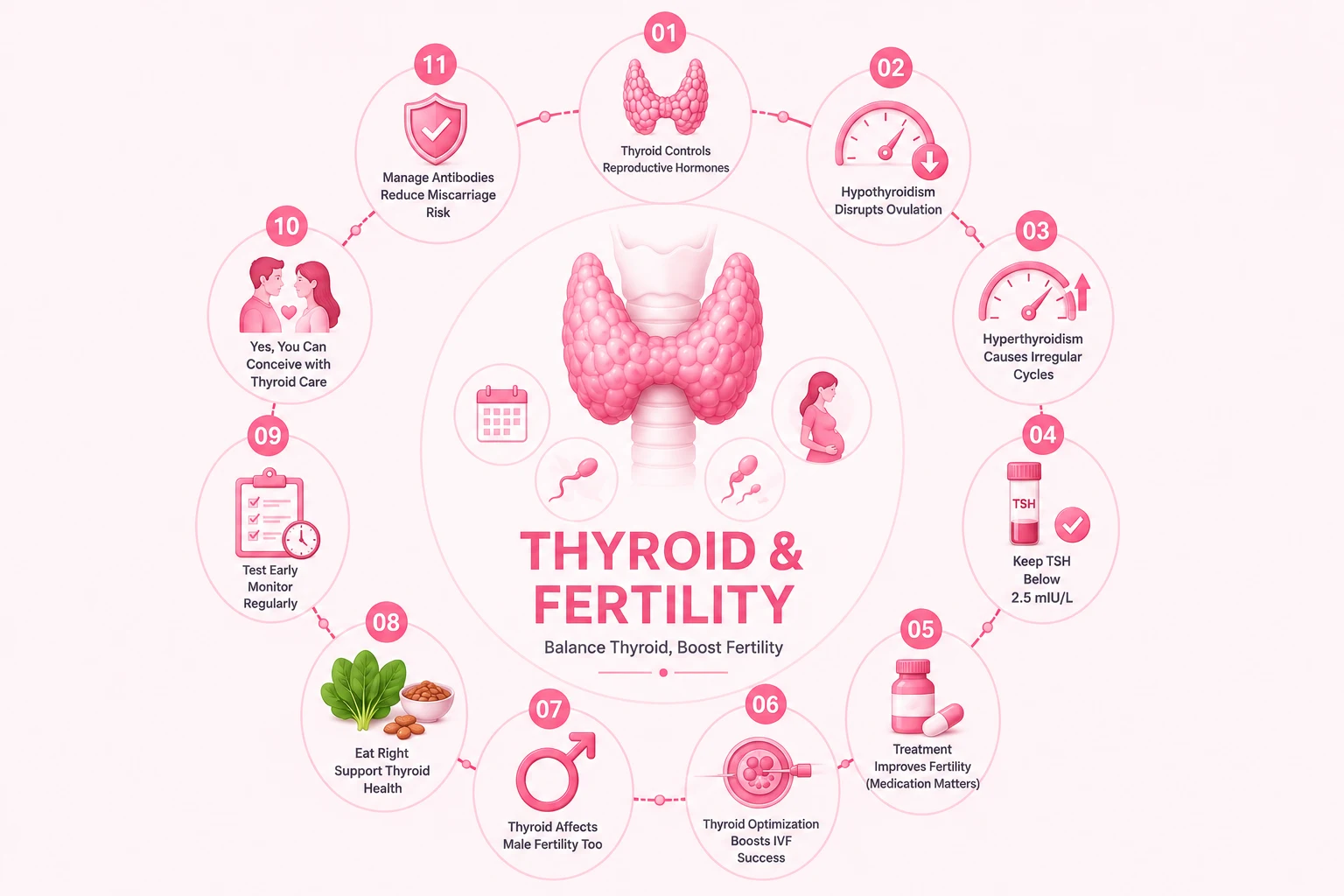
Thyroid disorders disrupt ovulation, menstrual cycles, and implantation by interfering with reproductive hormones. Both hypothyroidism and hyperthyroidism reduce fertility and raise miscarriage risk. With TSH optimised below 2.5 mIU/L through medication, most thyroid patients conceive successfully — naturally or through IVF.
What Does the Thyroid Do? (And Why It Matters for Fertility)
The thyroid is a small, butterfly-shaped gland at the base of your neck. Small, yes – but it controls an enormous amount of what happens in your body.
It produces two key hormones: T3 (triiodothyronine) and T4 (thyroxine). These regulate your metabolism, body temperature, heart rate, and – critically – your reproductive hormones. The brain signals the thyroid using a third hormone called TSH (thyroid-stimulating hormone). Think of TSH as the volume knob: when thyroid hormones are low, TSH goes up to push the gland to produce more.
So why does this matter for fertility?
Thyroid hormones are deeply intertwined with the hormones that govern your menstrual cycle – particularly oestrogen, progesterone, and prolactin. When thyroid function is off, it can:
- Disrupt ovulation (you may not release an egg at all)
- Make your menstrual cycle irregular or absent
- Affect egg quality
- Raise prolactin levels, which further suppresses ovulation
In short, thyroid and fertility are not separate conversations. They’re the same one.
Hypothyroidism and Fertility – What Happens When the Thyroid Is Underactive
Hypothyroidism means your thyroid isn’t producing enough T3 and T4. It’s the more common of the two conditions – and it’s remarkably prevalent in India.
Studies show that hypothyroidism affects approximately 10.95% of Indian adults overall, with the rate rising to nearly 15.86% in women. That’s roughly 1 in 6 Indian women. Across the country, an estimated 42 million people are living with some form of thyroid disorder – many without knowing it.
How it disrupts fertility
When thyroid hormones are low, the pituitary gland produces more TSH. This also triggers a rise in prolactin – the hormone associated with breastfeeding. High prolactin suppresses the hormones (LH and FSH) needed for ovulation. No ovulation means no pregnancy.
Hypothyroidism can also cause:
- Irregular or heavy periods – sometimes so heavy they cause anaemia
- Anovulation – cycles where no egg is released
- Poor egg quality
- Elevated miscarriage risk, especially if TPO antibodies (anti-thyroid peroxidase antibodies) are present
Symptoms to watch for
- Persistent fatigue and sluggishness
- Unexplained weight gain
- Feeling cold all the time
- Heavy or irregular periods
- Hair thinning or hair fall
- Difficulty conceiving despite trying
The TPO antibody link
Women with positive TPO antibodies – a marker of thyroid autoimmunity – have a significantly higher risk of miscarriage, even when their TSH is technically normal. This is why a full thyroid panel, not just a TSH test, matters when you’re trying to conceive.
Hyperthyroidism and Fertility – What Happens When the Thyroid Is Overactive
Hyperthyroidism is the opposite problem – the thyroid produces too much hormone. The most common cause is Graves’ disease, an autoimmune condition.
How it disrupts fertility
Excess thyroid hormone throws the entire hormonal axis into overdrive. It can cause:
- Irregular or scanty periods (oligomenorrhoea)
- Anovulation – again, no egg, no pregnancy
- Increased risk of miscarriage if untreated
- Complications during pregnancy including high blood pressure and preterm delivery
Symptoms to watch for
- Unexplained weight loss despite eating well
- Anxiety, restlessness, feeling “wired”
- Fast heartbeat or palpitations
- Excessive sweating
- Very light or infrequent periods
- Difficulty sleeping
Graves’ disease and TRAb antibodies
If you have Graves’ disease, your blood may contain TRAb (TSH receptor antibodies). These antibodies can cross the placenta during pregnancy and, in rare cases, temporarily affect the baby’s thyroid. This is why women with a history of Graves’ disease need close monitoring – even after their thyroid function has normalised.
What TSH Level Is Safe to Get Pregnant?
This is one of the most common questions we hear – and the answer is more nuanced than a single number.
At a Glance: TSH Targets
| Situation | Target TSH Level |
| Non-pregnant adult (general) | 0.5 – 4.5 mIU/L |
| Trying to conceive | < 2.5 mIU/L (ideal) |
| First trimester of pregnancy | < 2.5 mIU/L |
| Second trimester | < 3.0 mIU/L |
| Third trimester | < 3.5 mIU/L |
| During IVF stimulation | < 2.5 mIU/L |
The American Thyroid Association recommends keeping TSH below 2.5 mIU/L in the first trimester when population-specific ranges aren’t available. Many fertility specialists in India follow this same benchmark.
What is subclinical hypothyroidism?
This is when your TSH is mildly elevated (say, between 2.5 and 10 mIU/L) but your T4 is still normal. It’s often missed because there are no obvious symptoms.
Subclinical hypothyroidism is important. It can still affect ovulation, increase miscarriage risk (especially if TPO antibodies are positive), and reduce IVF success rates. If you’re trying to conceive, a TSH above 2.5 warrants a conversation with your doctor – even if your lab report says “normal.”
When should you get tested?
- Before trying to conceive – ideally 3 months before
- At the start of an IVF cycle – TSH must be optimised before stimulation begins
- As soon as you find out you’re pregnant – thyroid hormone needs increase by 30–50% in early pregnancy
Can a Thyroid Patient Get Pregnant? (Yes – Here’s How)
Let’s be direct: yes, thyroid patients can and do conceive successfully every day. The key is getting the right diagnosis and the right treatment before you start trying.
For hypothyroidism
Levothyroxine is the standard treatment – a synthetic form of T4 that your body converts to T3. It’s safe, effective, and has been used for decades. Once your TSH is brought below 2.5 mIU/L, ovulation often resumes and conception becomes much more likely.
Important: your dose will likely need to increase during pregnancy – usually by 25–50 mcg. Don’t wait for your next scheduled appointment. As soon as you get a positive pregnancy test, contact your doctor.
For hyperthyroidism
Treatment options include:
- Antithyroid medications (PTU or Carbimazole) – to reduce hormone production
- Radioactive iodine (RAI) – effective, but you must wait at least 6 months after RAI before trying to conceive, as it takes time for thyroid function to stabilise
- Surgery – rarely needed, but an option in specific cases
The key point: do not try to conceive while hyperthyroidism is uncontrolled. The risks to both mother and baby are significant. Once treated and stable, your fertility should improve substantially.
The specialist team matters
Thyroid-related fertility issues are best managed by an endocrinologist and a fertility specialist working together. One manages your thyroid levels; the other manages your conception plan. At a good fertility centre, this coordination happens seamlessly.
Thyroid and IVF – What You Need to Know
If you’re planning IVF Treatment, thyroid function isn’t just a background consideration – it’s front and centre.
Why TSH must be optimised before IVF
During an IVF cycle, your ovaries are stimulated with hormones. This stimulation raises oestrogen levels significantly – and high oestrogen can affect thyroid hormone binding, pushing TSH up. If your TSH is already borderline, IVF stimulation can push it into a range that affects implantation.
Most fertility specialists require TSH < 2.5 mIU/L before starting an IVF cycle.
Thyroid antibodies and embryo implantation
Women with positive TPO antibodies have lower implantation rates and higher miscarriage rates in IVF, even with normal TSH. The exact mechanism isn’t fully understood, but the autoimmune environment appears to affect the uterine lining’s receptivity.
This is why antibody testing – not just TSH – is part of a thorough pre-IVF workup.
Monitoring during the IVF cycle
Your thyroid function should be checked:
- Before starting stimulation
- Around the time of egg retrieval
- At embryo transfer
- In early pregnancy after a positive beta-hCG
The reassuring news
With properly managed thyroid levels, IVF success rates in thyroid patients are comparable to those in women without thyroid issues. The thyroid is a manageable variable – not a barrier.
Thyroid and Male Fertility – Often Overlooked
Here’s something many couples don’t know: thyroid disorders affect men’s fertility too.
Thyroid hormones play a role in sperm production, maturation, and function. Research shows that both hypothyroidism and hyperthyroidism in men can cause:
- Reduced sperm count
- Lower sperm motility (how well sperm swim)
- Abnormal sperm morphology (shape)
- Reduced semen volume
The good news: these changes are often reversible once thyroid function is normalised.
If you and your partner have been trying to conceive without success, both of you should be tested – including a full thyroid panel for the male partner, not just a semen analysis. It’s a simple blood test that’s often skipped but can make a real difference.
Thyroid Diet Tips for Fertility (Indian Context)
Diet won’t replace medication, but it absolutely supports thyroid health – and fertility more broadly. Here’s what to focus on, with Indian food in mind.
Foods that support thyroid function
- Iodine-rich foods: Fish (rohu, hilsa), dairy (dahi, paneer, milk), eggs, and iodised salt – use it every day. Iodine deficiency is one of the leading causes of hypothyroidism in India.
- Selenium: Brazil nuts (even 2–3 a day helps), sunflower seeds (til), eggs, and mushrooms. Selenium helps convert T4 to the active T3.
- Zinc: Pumpkin seeds, chickpeas (chana), lentils (dal), and meat. Zinc supports TSH production.
- Iron: Palak (spinach – cooked, not raw), rajma, and fortified cereals. Iron deficiency worsens hypothyroidism.
Foods to limit (not eliminate)
- Raw cruciferous vegetables in large quantities: Gobi (cauliflower), broccoli, cabbage, and radish contain goitrogens – compounds that can mildly interfere with thyroid hormone production when eaten raw in large amounts. Cooking them largely neutralises this effect. Don’t panic about your sabzi – just don’t eat a raw broccoli salad every day.
- Excess soy: Soy isoflavones can interfere with thyroid hormone absorption if consumed in very large quantities. Moderate amounts of tofu or soy milk are fine.
- Highly processed foods and excess sugar: These promote inflammation, which worsens autoimmune thyroid conditions.
When to See a Fertility Doctor About Thyroid Issues
Don’t wait until you’ve been trying for a year. See a specialist sooner if you have:
- TSH above 4 mIU/L – even if your GP says it’s “borderline normal”
- Irregular periods – cycles shorter than 21 days or longer than 35 days
- A history of miscarriage – even one unexplained loss warrants a full thyroid workup
- Positive TPO antibodies – even with normal TSH
- Difficulty conceiving for more than 6 months (if you’re over 35, make that 3 months)
- Known Graves’ disease and planning a pregnancy
Mediworld Fertility, with centres across Delhi NCR – including New Delhi, Ghaziabad, Faridabad, and Greater Noida – regularly sees and treats patients with thyroid-related fertility challenges. The team works with endocrinologists to optimise thyroid levels before and during fertility treatment, whether that’s timed intercourse, IUI.
Frequently Asked Questions
Can I get pregnant with hypothyroidism? expand_more
Yes. Hypothyroidism is one of the most treatable causes of fertility problems. Once your TSH is brought to the target range (below 2.5 mIU/L) with levothyroxine, ovulation typically resumes and your chances of conception improve significantly. Many women with hypothyroidism conceive naturally; others may need additional fertility support, but the thyroid itself is rarely an insurmountable barrier.
What TSH level is safe for pregnancy? expand_more
Most fertility specialists and guidelines recommend a TSH of less than 2.5 mIU/L before conception and during the first trimester. In the second trimester, the target is below 3.0 mIU/L, and in the third trimester, below 3.5 mIU/L. If your TSH is above 2.5 and you're trying to conceive, speak to your doctor about adjusting your medication - even if your lab report marks it as "within normal range."
Does thyroid affect IVF success? expand_more
Yes, it can - but the impact is manageable. Uncontrolled hypothyroidism or elevated TSH before an IVF cycle can reduce implantation rates and increase miscarriage risk. Positive TPO antibodies also affect embryo implantation. However, with TSH optimised below 2.5 mIU/L and proper monitoring throughout the cycle, IVF success rates in thyroid patients are comparable to those in women without thyroid issues.
Can thyroid cause miscarriage? expand_more
Yes, this is a real and well-documented risk. Both uncontrolled hypothyroidism and hyperthyroidism increase miscarriage risk. Additionally, women with positive TPO antibodies - even those with normal TSH - have a higher rate of miscarriage. This is why a full thyroid panel (TSH + Free T4 + TPO antibodies) is recommended for anyone with a history of pregnancy loss.
How long does it take to get pregnant after thyroid treatment? expand_more
It varies. Once levothyroxine brings your TSH into the target range, ovulation can resume within 1–3 months. Many women conceive naturally within 3–6 months of starting treatment. If conception hasn't happened within 6 months of optimised thyroid levels (or 3 months if you're over 35), a fertility evaluation is a sensible next step.
Is thyroid disease hereditary and will it affect my baby? expand_more
Thyroid conditions - particularly autoimmune ones like Hashimoto's thyroiditis and Graves' disease - do tend to run in families. There is a genetic component, so your children may have a higher risk of thyroid issues than the general population. However, with proper management during pregnancy, the vast majority of babies born to mothers with thyroid conditions are completely healthy. In women with Graves' disease, TRAb antibodies can occasionally cause temporary hyperthyroidism in the newborn, but this is monitored and treatable.

 WhatsApp