
IVF Diet Chart: What to Eat and Avoid for Better Success
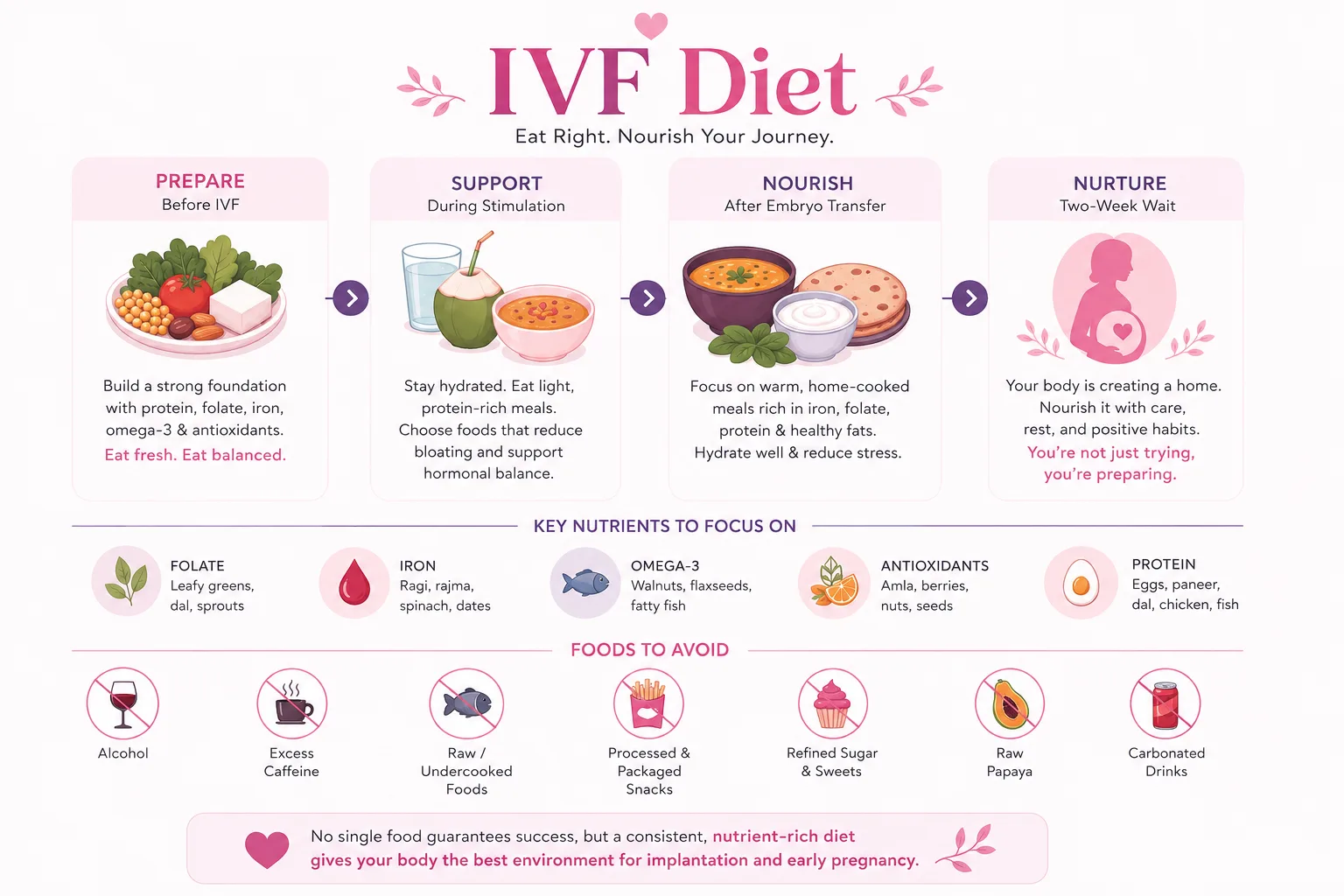
Your IVF diet chart should centre on protein, folate, iron, omega-3 fats, and antioxidants – all easily found in everyday Indian foods like dal, paneer, eggs, leafy greens, nuts, and seeds. Avoid alcohol, excess caffeine, raw/undercooked foods, processed snacks, and raw papaya – especially after embryo transfer. No single food guarantees success, but a consistent, nutrient-rich Indian diet plan gives your body the best possible environment for implantation and early pregnancy.
Why Your Diet Matters During IVF
IVF is physically demanding. Hormonal stimulation, egg retrieval, and embryo transfer all place extra nutritional stress on your body. What you eat in the weeks around your cycle directly affects egg quality, uterine lining, and the hormonal environment needed for implantation.
A 2018 prospective cohort study published in Human Reproduction found that women under 35 who followed a Mediterranean-style diet had clinical pregnancy rates of 50% vs. 29% compared to those with low adherence – a difference that’s hard to ignore. The Mediterranean pattern maps almost perfectly onto a well-planned Indian diet: legumes, vegetables, whole grains, healthy fats, and lean protein.
The good news? You don’t need expensive superfoods. Your kitchen already has most of what you need.
Get Expert Guidance for Your Fertility Journey
Take the next step with Mediworld Fertility. Connect with our team to book your consultation.
 WhatsApp Us

Key Nutrients Your Body Needs During IVF
Folate & Folic Acid
Folate is non-negotiable. It supports cell division, DNA synthesis, and reduces the risk of neural tube defects from the very first days after fertilisation.
Best Indian sources: Palak (spinach), methi, broccoli, moong dal, rajma, chana, sprouts, and fortified cereals.
Most fertility specialists also prescribe a 400–800 mcg folic acid supplement daily – take it even if your diet is good.
Iron
Low iron means poor oxygen delivery to the developing embryo and a thinner uterine lining. Iron deficiency is common in Indian women, so this one deserves extra attention.
Best Indian sources: Ragi, rajma, chana, sesame seeds (til), dates (khajoor), spinach, and lean red meat (if non-vegetarian). Pair iron-rich foods with Vitamin C (amla, guava, lemon) to boost absorption.
Omega-3 Fatty Acids
Omega-3s reduce inflammation, support egg cell membrane health, and improve blood flow to the uterus.
Best Indian sources: Walnuts (akhrot), flaxseeds (alsi), chia seeds, and fatty fish like rohu or salmon if you eat non-veg. Even 1 tablespoon of ground flaxseed stirred into your roti dough or curd makes a meaningful difference.
Antioxidants (Vitamins C, E & CoQ10)
Oxidative stress damages eggs and sperm. Antioxidants neutralise free radicals and protect reproductive cells.
Best Indian sources: Amla (one of the richest sources of Vitamin C on the planet), guava, tomatoes, bell peppers, almonds, sunflower seeds, and turmeric. CoQ10 is harder to get from food alone – your doctor may recommend a supplement (100–600 mg/day) if you have diminished ovarian reserve.
Vitamin D
Vitamin D deficiency is widespread in India – even in sunny Delhi. Low Vitamin D is linked to poorer IVF outcomes, particularly in the implantation phase.
Best Indian sources: Full-fat dairy, egg yolks, fatty fish, and – most importantly – 15–20 minutes of morning sunlight. Get your Vitamin D levels tested before your cycle; supplementation is often necessary.
Protein
Every cell in your body is built from protein. During IVF, adequate protein supports follicle development, hormone production, and uterine lining thickness.
Target: Aim for 1–1.2 g of protein per kg of body weight per day. For a 55 kg woman, that’s roughly 55–66 g daily.
Best Indian sources: Eggs, paneer, curd (dahi), dal, rajma, chana, moong, tofu, chicken, and fish.
Request a Consultation
IVF Diet Chart – What to Eat (Indian Meal Plan)
Here’s a practical 7-day Indian diet plan for IVF. Rotate meals based on what’s seasonal and available in your city.
| Day | Breakfast | Mid-Morning Snack | Lunch | Evening Snack | Dinner |
| Mon | Moong dal chilla + curd | Soaked almonds + 1 guava | 2 rotis + palak dal + gajar sabzi + salad | Roasted chana + coconut water | Paneer bhurji + 1 roti + vegetable soup |
| Tue | Oats porridge with walnuts & banana | 1 apple + 4 walnuts | Brown rice + rajma curry + cucumber raita | Makhana (fox nuts) + green tea | Tofu stir-fry + 2 rotis + dal |
| Wed | Vegetable poha with peanuts + 1 boiled egg | Pomegranate seeds + chia water | 2 rotis + chana masala + methi sabzi + curd | Sprout chaat | Grilled fish / paneer tikka + roti + soup |
| Thu | Idli (2) + sambar + coconut chutney | Soaked raisins + almonds | Brown rice + moong dal + bhindi sabzi + salad | 1 banana + peanut butter | Egg curry / dal makhani + 1 roti + sabzi |
| Fri | Multigrain roti + scrambled eggs / paneer | 1 pear + handful of pumpkin seeds | 2 rotis + mixed dal + palak sabzi + curd | Roasted chana + lemon water | Chicken soup / tofu curry + brown rice |
| Sat | Ragi dosa + sambar | Amla juice + soaked cashews | Khichdi (moong + rice) + curd + salad | Fruit bowl (papaya-free) + walnuts | Palak paneer + 2 rotis + vegetable soup |
| Sun | Vegetable upma + curd | Coconut water + 1 orange | 2 rotis + rajma + lauki sabzi + raita | Makhana + herbal tea | Egg bhurji / paneer curry + roti + dal |
Tips for this IVF diet plan:
- Start every morning with 2 glasses of warm water.
- Add 1 tbsp ground flaxseed to your roti dough or curd daily.
- Use cold-pressed mustard or olive oil for cooking – avoid refined oils.
- Ghee in small amounts (1 tsp/day) is fine and supports fat-soluble vitamin absorption.
Foods to Eat During IVF Stimulation Phase
The stimulation phase (days 1–12 of your cycle, roughly) is when your ovaries are working hardest. Your priorities shift slightly:
- Hydration is critical. Drink 2.5–3 litres of water or coconut water daily. This helps prevent ovarian hyperstimulation syndrome (OHSS) and keeps follicle fluid healthy.
- Protein at every meal. Don’t skip it. Eggs, dal, paneer, or curd at breakfast, lunch, and dinner.
- Reduce bloating triggers. Avoid carbonated drinks, very high-fibre raw salads (lightly cooked vegetables are easier on a stimulated abdomen), and large meals. Eat small, frequent meals instead.
- Electrolytes matter. Coconut water, nimbu pani with a pinch of salt, or a banana helps maintain electrolyte balance when you’re on injections.
- Anti-inflammatory foods: turmeric in warm milk, ginger in dal, and omega-3-rich walnuts and flaxseeds daily.
Diet After Embryo Transfer – What to Focus On
The two weeks after embryo transfer are the most emotionally charged – and nutritionally important – of your entire IVF journey. The embryo is trying to implant. Your job is to create a calm, nourishing internal environment.
Focus on:
- Warm, freshly cooked foods. Avoid cold, raw, or refrigerated leftovers where possible.
- Iron and folate-rich foods every day – palak, dal, rajma, methi.
- Protein at every meal to support the uterine lining.
- Healthy fats – ghee, walnuts, flaxseeds – to support progesterone production.
- Fibre to prevent constipation (a common side effect of progesterone supplements). Oats, ragi, sabzi, and curd all help.
- Staying well-hydrated – aim for 8–10 glasses of water daily.
Avoid anything on the IVF foods to avoid list below, and be especially strict about alcohol, caffeine, and raw foods during this window.
IVF Diet for Women with PCOS
Women with PCOS often benefit from a slightly different IVF diet because insulin resistance and hormonal imbalance can affect ovulation and egg quality. Focus on high-protein meals, whole grains, fibre-rich vegetables, healthy fats, and low-glycaemic carbohydrates while limiting sugary drinks and refined flour. Foods like dal, paneer, sprouts, oats, nuts, seeds, and leafy greens help maintain stable blood sugar levels throughout treatment. At MediWorld Fertility, Delhi, nutritional advice is tailored according to your fertility diagnosis, helping improve overall metabolic health while supporting the best possible conditions for successful IVF treatment.
IVF Foods to Avoid (Full List)
| Food / Drink | Why to Avoid |
| Alcohol | Disrupts hormone levels, reduces implantation rates, harmful to embryo |
| Caffeine (>200 mg/day) | Linked to higher miscarriage risk; limit to 1 small cup of tea/coffee max |
| Raw or undercooked meat, fish, eggs | Risk of Listeria, Salmonella – dangerous during early pregnancy |
| High-mercury fish (shark, swordfish, king mackerel) | Mercury damages fetal neurological development |
| Unpasteurised dairy (raw milk, soft cheeses from raw milk) | Risk of Listeria infection |
| Processed & packaged snacks (chips, biscuits, instant noodles) | Trans fats, refined carbs, and additives worsen inflammation |
| Refined sugar & sweets (mithai, cold drinks, packaged juices) | Spikes blood sugar, worsens PCOS, disrupts hormones |
| Maida-based foods (white bread, naan, pastries) | High glycaemic index, low nutritional value |
| Fried foods (pakoras, samosas, puri) | Saturated and trans fats impair egg quality |
| Soy in excess (soy milk, soy protein isolate daily) | Phytoestrogens may interfere with hormone balance in large amounts |
| Carbonated drinks | Bloating and empty calories |
| Artificial sweeteners | Emerging evidence links them to gut microbiome disruption |
| Deli meats / processed meats | Nitrates, preservatives, and Listeria risk |
Fruits to Avoid After Embryo Transfer
Most fruits are excellent during IVF. But a few deserve caution in the post-transfer window:
Raw / unripe papaya – Contains papain, an enzyme that can stimulate uterine contractions. Avoid completely after embryo transfer.
Pineapple (especially the core in large amounts) – Contains bromelain, which may affect implantation. A small slice of ripe pineapple is unlikely to cause harm, but it’s safer to skip it during the two-week wait.
Grapes in very large quantities – Some clinics advise moderation due to resveratrol content, though evidence is limited.
Fruits that are safe and beneficial after transfer:
- Pomegranate (excellent for uterine blood flow)
- Apples
- Bananas (ripe)
- Berries – blueberries, strawberries
- Guava (high Vitamin C)
- Amla (richest natural source of Vitamin C)
- Pears
- Oranges and sweet lime (mosambi)
Lifestyle Tips to Support Your IVF Diet
Diet alone isn’t the whole picture. These habits amplify everything you eat:
- Sleep 7–8 hours. Poor sleep raises cortisol and disrupts reproductive hormones. This is not optional.
- Gentle movement only. A 20–30 minute walk is ideal during stimulation and after transfer. Avoid intense gym workouts, hot yoga, or anything that raises core body temperature significantly.
- Manage stress actively. Cortisol directly suppresses progesterone. Pranayama, guided meditation, or even 10 minutes of quiet reading helps more than you’d think.
- Stop smoking immediately. Smoking reduces ovarian reserve and IVF success rates – there’s no safe level during treatment.
- Limit plastic exposure. Store food in glass or steel containers. BPA from plastic can act as an endocrine disruptor.
- Take prescribed supplements consistently. Don’t skip folic acid, Vitamin D, or any medication your doctor has prescribed, even on days you feel fine.
IVF Diet for Vegetarians
A vegetarian diet can fully support IVF when meals are planned carefully. Good-quality protein should come from paneer, tofu, curd, dal, rajma, chana, soy in moderation, sprouts, quinoa, and nuts. Vitamin B12, iron, Vitamin D, and omega-3 intake may require additional attention, especially if dairy intake is low. Including a variety of colourful vegetables, fruits, whole grains, and healthy fats ensures adequate nutrition throughout treatment. At MediWorld Fertility, Delhi, our specialists help vegetarian patients identify nutritional gaps and recommend supplements only when medically necessary to optimise fertility outcomes.
IVF Diet Consultation in Delhi
Eating well during IVF is important, but every woman has different nutritional needs based on age, BMI, PCOS, thyroid disorders, endometriosis, AMH levels, and the stage of treatment. A personalised IVF diet plan is often more effective than following a generic chart. At MediWorld Fertility in Delhi, our fertility specialists review your medical history, blood tests, medications, and treatment protocol before advising nutritional changes. Whether you are preparing for IVF, undergoing ovarian stimulation, or recovering after embryo transfer, our team provides practical dietary guidance that complements your fertility treatment and supports a healthier pregnancy journey.
Frequently Asked Questions
Can I eat non-veg during IVF? expand_more
Yes - and it can actually be beneficial. Eggs, chicken, and fish are excellent sources of protein, omega-3 fatty acids, and iron. The key rules: cook everything thoroughly (no raw or rare meat, no sushi), avoid high-mercury fish (shark, swordfish, king mackerel), and choose fresh over processed. Grilled or steamed fish like rohu, pomfret, or salmon is ideal during your IVF cycle.
Is coffee allowed during IVF? expand_more
In moderation, yes. Most fertility specialists recommend keeping caffeine under 200 mg per day - that's roughly one small cup of filter coffee or two cups of light tea. Avoid energy drinks, cola, and strong espresso shots entirely. After embryo transfer, many doctors suggest cutting caffeine out completely for the two-week wait, just to be safe.
Which fruits are best after embryo transfer? expand_more
The best fruits post-transfer are pomegranate, guava, amla, apples, ripe bananas, berries, and oranges. These are rich in Vitamin C, antioxidants, and natural sugars that support energy without spiking blood glucose. Avoid raw papaya and limit pineapple during this window
Should I take supplements during IVF? expand_more
Folic acid (400–800 mcg/day) is universally recommended and should be started at least one month before your cycle. Vitamin D supplementation is often necessary in India - get your levels tested first. CoQ10 (100–600 mg/day) may help women with diminished ovarian reserve or poor response to stimulation, based on current evidence. Always discuss any supplement with your fertility specialist before starting - the right dose depends on your individual test results.
How much water should I drink during IVF? expand_more
Aim for 2.5–3 litres per day during the stimulation phase, and 8–10 glasses (2–2.5 litres) after embryo transfer. Good hydration supports follicle development, reduces OHSS risk, and helps your body process the medications you're taking. Coconut water and nimbu pani (without sugar) count toward your daily fluid intake and also provide electrolytes.
When should I start an IVF diet before treatment? expand_more
9. When should I start an IVF diet before treatment?
Ideally, start following a healthy fertility diet at least 2 to 3 months before your IVF cycle. Since egg development takes approximately 90 days, improving nutrition early may support better egg quality before ovarian stimulation begins.
Why Choose MediWorld Fertility for IVF Treatment in Delhi? expand_more
Successful IVF depends on much more than laboratory procedures. Individualised treatment planning, advanced embryology, experienced fertility specialists, and comprehensive patient support all play an important role. At MediWorld Fertility, Delhi, patients receive personalised IVF care that includes fertility assessment, ovarian stimulation monitoring, embryo transfer planning, nutritional counselling, and ongoing guidance throughout treatment. Our team believes that medical treatment and healthy lifestyle habits work together to optimise reproductive health. Whether you are beginning your first IVF cycle or exploring treatment after previous unsuccessful attempts, we provide evidence-based fertility care tailored to your individual needs.
Where can I consult an IVF specialist and fertility expert in Delhi? expand_more
If you are planning IVF, ICSI, or fertility treatment, you can consult the fertility specialists at MediWorld Fertility in Delhi. Along with advanced fertility treatments, the team offers personalised guidance on nutrition, lifestyle modifications, and treatment planning based on your individual fertility needs.