
Lifestyle Changes to Boost Fertility Naturally
Trying to conceive is one of the most personal journeys a couple can take. For many couples across Delhi NCR – juggling long commutes, demanding jobs, and the relentless pace of city life – that journey can feel lonely and overwhelming. You are not alone.
The good news: a growing body of research shows that specific, practical lifestyle changes to boost fertility naturally can genuinely improve your chances of conception. This guide walks you through 10 evidence-backed steps, with honest explanations of what the science says and what you can realistically do starting today.
Why Lifestyle Matters for Fertility
Fertility isn’t just about biology – it’s deeply connected to how you live every day. Your hormones respond to what you eat, how you sleep, how much you move, and even the air you breathe. Disrupted hormone balance can delay ovulation, reduce sperm quality, and make conception harder.
The encouraging part is that many of these factors are within your control. You don’t need expensive supplements or dramatic overhauls. Small, consistent changes – made together as a couple – can shift the odds in your favour. Think of it as building the best possible environment for a pregnancy to happen.
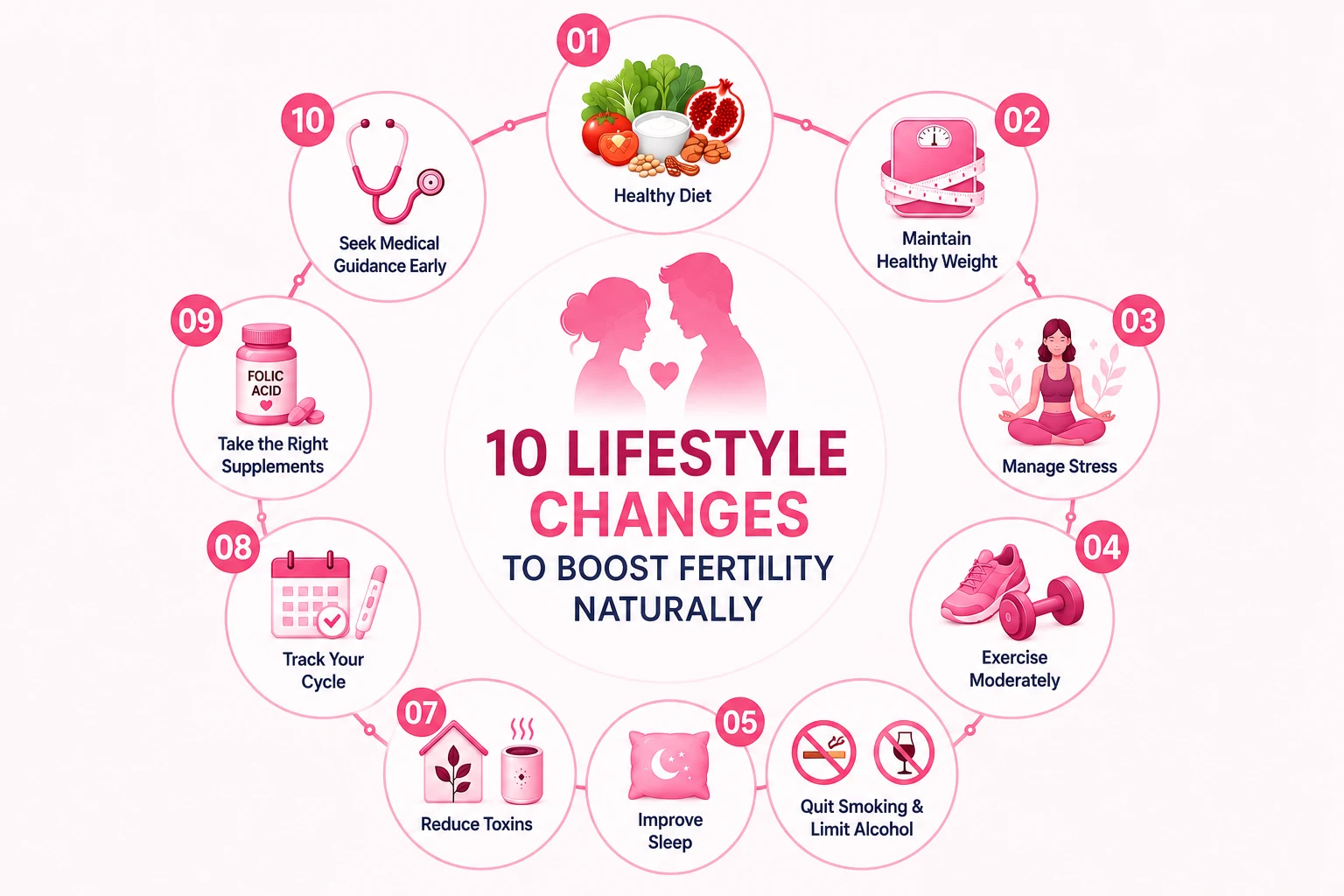
10 Proven Lifestyle Changes to Boost Fertility Naturally
1. Eat a Fertility-Boosting Diet (फर्टिलिटी बढ़ाने वाला आहार)
Food is medicine – and when it comes to fertility, what you put on your plate matters more than almost any supplement. A Mediterranean-style diet, rich in whole grains, plant proteins, healthy fats, and antioxidant-packed vegetables, is consistently associated with better fertility outcomes in women.
Research published in Human Reproduction Update found that women who followed a healthy dietary pattern had significantly better fertility outcomes compared to those eating a diet high in processed foods and trans fats. For couples wondering how to improve fertility in women through diet, the answer starts with real, whole food.
Here are the top fertility-boosting foods for women to prioritise:
| Food | Why It Helps |
| Leafy greens (spinach, methi, palak) | Rich in folate, which supports healthy ovulation and early embryo development |
| Lentils & dal | Excellent plant protein; replacing animal protein with plant protein is linked to lower ovulatory infertility risk |
| Full-fat dairy (dahi, paneer, whole milk) | Observational studies associate full-fat dairy with lower ovulatory infertility risk |
| Walnuts | High in omega-3 fatty acids that support hormonal balance and egg quality |
| Sunflower seeds | Rich in vitamin E and selenium, both important antioxidants for reproductive health |
| Pomegranate | Contains antioxidants that may improve uterine blood flow and lining thickness |
| Fatty fish (salmon, mackerel, rohu) | Omega-3s linked to improved fertility-related outcomes |
| Whole grains (brown rice, oats, ragi) | High-fibre carbs associated with better ovulatory function |
Avoid: trans fats (found in packaged biscuits, namkeen, and fried fast food), refined carbohydrates, added sugars, and excess red or processed meat. These are consistently linked to worse fertility outcomes in the research.
Foods that increase female fertility are not exotic imports – most of them are already part of a traditional Indian kitchen. The key is getting back to them.
2. Maintain a Healthy Weight (स्वस्थ वजन बनाए रखें)
This one is backed by some of the clearest data in fertility medicine. A Danish cohort study found that overweight women took a median of 4–5 months to conceive, compared to 3 months for women with a healthy BMI. Among ovulatory but subfertile women, each 1-unit increase in BMI reduces the chance of spontaneous conception by roughly 5%.
Being underweight is equally problematic – it can suppress ovulation entirely.
For couples in Delhi NCR, this is especially relevant. Sedentary desk jobs, long hours of screen time, and the habit of ordering in rather than cooking at home have quietly pushed average BMIs upward. Even a modest 5–10% reduction in body weight, if you are overweight, can restore ovulation and dramatically improve your chances.
3. Manage Stress Effectively (तनाव को नियंत्रित करें)
Delhi’s high-stress lifestyle – traffic, deadlines, family pressure, financial stress – takes a real toll on your hormones. Chronic stress elevates cortisol, which in turn suppresses the reproductive hormones LH and FSH that drive ovulation and sperm production.
Yoga, mindfulness meditation, and diaphragmatic breathing are the most practical tools for managing cortisol without medication. Even 20 minutes of daily pranayama has been shown to reduce stress hormone levels in clinical settings.
Pregnancy ke liye lifestyle tips (प्रेगनेंसी के लिए लाइफस्टाइल टिप्स) always include stress management at the top – and for good reason. Consider joining a yoga class, using a guided meditation app, or simply building in 15 minutes of quiet time each morning before the day takes over.
4. Exercise the Right Amount
Exercise is good for fertility – but the dose matters. Aim for 30 minutes of moderate exercise (brisk walking, swimming, cycling) on most days of the week. This improves insulin sensitivity, supports a healthy BMI, and reduces inflammation – all of which benefit reproductive health.
The trap to avoid: over-exercising. Women who engage in very intense, prolonged exercise (think marathon training or daily high-intensity workouts) can experience disrupted ovulation and irregular periods. If your periods have become irregular since you ramped up your exercise routine, that’s a signal worth paying attention to.
Moderate movement is one of the most underrated natural ways to boost fertility – and it costs nothing.
5. Quit Smoking and Limit Alcohol (धूम्रपान और शराब छोड़ें)
This is non-negotiable. Smoking damages egg DNA, accelerates ovarian ageing, and is directly linked to higher sperm DNA fragmentation in men – meaning the genetic material inside sperm is more likely to be damaged, which reduces fertilisation success and increases miscarriage risk.
The American Society for Reproductive Medicine (ASRM) is unambiguous: tobacco use impairs fecundity in both women and men, and IVF outcomes are measurably worse in smokers.
Alcohol is more nuanced, but heavy drinking is clearly associated with ovulatory problems. The safest approach when trying to conceive: avoid alcohol entirely, or keep it to an absolute minimum.
6. Improve Sleep Quality (नींद सुधारें)
Sleep is when your body resets its hormonal clock. Melatonin – the hormone that regulates your sleep-wake cycle – also plays a direct role in ovarian function, oocyte quality, and menstrual cycle regulation. Studies show that women with disrupted sleep patterns have poorer egg quality and more irregular cycles.
Target 7–8 hours of uninterrupted sleep every night. Practical steps:
- Switch off screens (phone, laptop, TV) at least 45 minutes before bed
- Keep your bedroom cool and dark
- Avoid caffeine after 3 pm
- Try to wake and sleep at the same time every day, even on weekends
In a city like Delhi, where late-night scrolling and binge-watching are the norm, protecting your sleep is a genuinely underrated fertility intervention.
7. Reduce Exposure to Environmental Toxins
This is a particularly relevant point for couples living in Delhi NCR. Delhi’s chronic high AQI – frequently in the “severe” category during winter months – exposes residents to PM2.5 and other particulate pollutants that are associated with reduced ovarian reserve, lower sperm motility, and poorer IVF outcomes.
Beyond air pollution, everyday chemical exposures add up:
- BPA (Bisphenol A): Found in plastic water bottles and food containers. BPA mimics oestrogen and can disrupt hormonal signalling. Switch to glass or stainless-steel bottles.
- Pesticides: Wash fruits and vegetables thoroughly; choose organic where possible.
- Household chemicals: Opt for fragrance-free, natural cleaning products.
You can’t control Delhi’s AQI, but you can use an air purifier at home, avoid outdoor exercise on high-pollution days, and reduce plastic use in your kitchen. Small steps, real impact.
8. Track Your Menstrual Cycle (मासिक धर्म ट्रैक करें)
Understanding your cycle is one of the most empowering things you can do when trying to conceive. The fertile window – the 5 days before ovulation and the day of ovulation itself – is when conception is possible. Missing it month after month is one of the most common reasons couples take longer to conceive.
Practical tools:
- Apps: Flo, Clue, or Glow can track your cycle and predict ovulation
- Basal Body Temperature (BBT): A slight rise in morning temperature signals that ovulation has occurred
- Ovulation predictor kits (OPKs): Available at any pharmacy in Delhi; detect the LH surge 24–36 hours before ovulation
If your cycles are consistently irregular – shorter than 21 days, longer than 35 days, or unpredictable – that may signal an underlying issue like PCOS or thyroid dysfunction. Don’t wait; get it checked. This is one area where fertility kaise badhaye (फर्टिलिटी कैसे बढ़ाएं) starts with knowing your own body.
9. Take the Right Supplements
Supplements can support fertility, but they work best as a complement to a good diet – not a replacement. The one supplement with the strongest evidence is folic acid: 400–800 mcg daily, started at least one month before trying to conceive. It reduces the risk of neural tube defects and is associated with lower ovulatory infertility risk.
Other supplements worth discussing with your doctor:
- Vitamin D: Deficiency is extremely common in India and linked to hormonal imbalance and poorer IVF outcomes
- CoQ10 (Coenzyme Q10): May improve egg quality, particularly in women over 35
- Omega-3 fatty acids: Support hormonal balance and reduce inflammation
Important: Always consult your doctor before starting any supplement. Dosing matters, and some supplements interact with medications or underlying conditions.
10. Seek Medical Guidance Early (जल्दी डॉक्टर से मिलें)
Lifestyle changes are powerful – but they work best when you also know what you’re working with medically. See a fertility specialist if:
- You are under 35 and have been trying for 6 months without success
- You are over 35 and have been trying for 3 months without success
- You have been diagnosed with PCOS, endometriosis, fibroids, or thyroid issues
- Your partner has a known low sperm count or previous semen analysis concerns
- Your periods are very irregular or absent
Early evaluation doesn’t mean jumping straight to IVF. It means getting a clear picture – hormone tests, ultrasound, semen analysis – so you and your doctor can make informed decisions together. In Delhi NCR, that kind of personalised guidance is available at Mediworld Fertility.
Lifestyle Tips for Men Too
Fertility is a two-person equation. About 40–50% of infertility cases involve a male factor. Sperm count badhane ke upay (स्पर्म काउंट बढ़ाने के उपाय) don’t require complicated protocols – they start with the same lifestyle principles that help women.
| Tip | Why It Matters |
| Eat zinc-rich foods (pumpkin seeds, chickpeas, eggs) | Zinc is essential for testosterone production and sperm development |
| Avoid heat exposure (hot baths, laptops on lap, tight underwear) | Scrotal temperature above 37°C impairs sperm production |
| Quit smoking completely | Smoking raises sperm DNA fragmentation and lowers count and motility |
| Limit alcohol | Heavy alcohol use reduces testosterone and sperm quality |
| Exercise moderately | Improves testosterone levels; avoid anabolic steroids entirely |
Men often feel sidelined in the fertility conversation. They shouldn’t be. Small changes in diet and daily habits can produce measurable improvements in sperm parameters within 3 months – the time it takes for a new batch of sperm to mature.
When Lifestyle Changes Are Not Enough
We want to be honest with you: lifestyle changes are genuinely helpful, but they are not a cure for all causes of infertility. Blocked fallopian tubes, severe endometriosis, premature ovarian insufficiency, or very low sperm count require medical treatment – and no amount of pomegranate juice or yoga will change that.
This isn’t a failure. It’s just biology.
When lifestyle optimization alone isn’t moving the needle, treatments like IUI (Intrauterine Insemination) or IVF (In Vitro Fertilisation) can make the difference. At Mediworld Fertility in Delhi, the approach is never one-size-fits-all. Dr. Neha Gupta, with over 12 years of IVF experience, works with each couple to understand the specific cause of their fertility challenge and build a personalised treatment plan – one that takes your lifestyle, medical history, and emotional wellbeing into account.
You’ve already taken the first step by seeking information. The next step is a conversation with someone who can help you make sense of your specific situation.
Frequently Asked Questions
How long does it take for lifestyle changes to improve fertility? expand_more
It depends on the change. Sperm take about 72–90 days to mature, so improvements in diet, sleep, and exercise can show up in semen analysis results within 3 months. For women, ovulation patterns can begin to normalise within 1–3 menstrual cycles after weight loss or stress reduction. Folic acid should ideally be started at least one month before trying to conceive. Be patient - these changes compound over time.
Can yoga really help with fertility? expand_more
Yoga won't unblock fallopian tubes or reverse severe PCOS on its own - but it's a genuinely useful tool for managing cortisol, improving sleep, and supporting a healthy BMI. In Delhi, you'll find excellent yoga studios in areas like Lajpat Nagar, Vasant Kunj, and South Extension, or you can follow structured sessions on YouTube from the comfort of home. Even 20–30 minutes of gentle yoga daily can meaningfully reduce stress hormones over weeks. Think of it as one piece of the puzzle, not the whole solution.
Which foods should I avoid to protect my fertility? expand_more
The clearest evidence points to avoiding trans fats (found in packaged snacks, fried street food, and margarine), refined carbohydrates (white bread, maida-based foods, sugary drinks), and excess processed meat. These are consistently linked to ovulatory dysfunction and poorer sperm quality. Alcohol and caffeine in excess are also worth reducing. You don't need to be perfect - but shifting away from ultra-processed foods and towards whole, home-cooked meals is one of the most impactful things you can do.
My periods are irregular - can lifestyle changes fix this? expand_more
Sometimes, yes. If irregular periods are driven by being overweight, high stress, or over-exercising, addressing those factors can restore regular cycles. However, irregular periods can also signal PCOS, thyroid dysfunction, hyperprolactinaemia, or premature ovarian insufficiency - conditions that need proper diagnosis and medical management. Fertility badhane ke upay (फर्टिलिटी बढ़ाने के उपाय) always start with understanding why your cycles are irregular. Don't self-diagnose - get a hormone panel done.
Where can I find a fertility doctor or get an appointment in Delhi? expand_more
Mediworld Fertility is one of Delhi NCR's most trusted fertility clinics, with centres in Safdarjung Enclave and Sukhdev Vihar, Delhi. Dr. Neha Gupta, who brings 12 years of specialised IVF experience, leads a team that offers comprehensive fertility evaluations, personalised treatment plans, and compassionate care for couples at every stage of their journey. They offer a free first consultation - so you can get expert guidance without any upfront commitment. To take that first step, book an appointment at Mediworld Fertility and let their team help you understand your options clearly.

 WhatsApp