
Indian Diet After Embryo Transfer: What to Eat, What to Avoid
After embryo transfer, prioritise warm cooked foods rich in folate, iron, protein, and omega-3s – dal, paneer, palak, and coconut water. Avoid raw papaya, alcohol, excess caffeine, and fried foods to support implantation during the two-week wait.
Why Your Diet Matters After Embryo Transfer
The 10–14 days after embryo transfer are called the implantation window – the period when the embryo travels to the uterine lining, attaches, and (if all goes well) begins to burrow in. During this time, the uterine lining needs to be well-nourished, well-perfused, and free from inflammation.
In our clinic, we advise patients that while no single food can force implantation to happen, a diet rich in anti-inflammatory nutrients, adequate protein, and key micronutrients creates the most receptive uterine environment possible. Think of it as preparing the soil before planting a seed – you can’t control the weather, but you can make sure the ground is ready.
Get Expert Guidance for Your Fertility Journey
Take the next step with Mediworld Fertility. Connect with our team to book your consultation.
 WhatsApp Us

Before vs After Embryo Transfer: How the Diet Shifts
Patients often ask whether the diet changes between the stimulation phase and the post-transfer period. It does – meaningfully. Before transfer, the focus is on supporting follicle development, managing ovarian response, and reducing OHSS risk. After transfer, the entire goal shifts to supporting endometrial receptivity and early embryo development.
Here’s a simple comparison:
| Before Transfer (Stimulation & Retrieval Phase) | After Transfer (Two-Week Wait) | |
| Primary focus | Follicle growth, egg quality, OHSS prevention | Implantation support, uterine lining health |
| Foods to prioritise | High protein, anti-inflammatory fats, leafy greens | Warm cooked foods, folate-rich dal, iron-rich vegetables, probiotics |
| Foods to avoid | Bloating foods, high-sodium foods (if OHSS risk), alcohol | Raw papaya, raw sprouts, alcohol, excess caffeine, fried foods |
| Hydration goal | High fluid intake, electrolytes (especially post-retrieval) | 8–10 glasses water/coconut water; warm fluids preferred |
| Activity level | Moderate; reduce intensity near retrieval | Gentle walking only; no strenuous exercise |
This page covers only the right-hand column. For the full stimulation-phase and retrieval-phase diet, refer to a complete IVF patient diet chart covering the whole treatment cycle.
Request a Consultation
Key Nutrients to Focus On After Embryo Transfer
After embryo transfer, prioritise folate, iron, protein, omega-3s, and antioxidants — through dal, palak, paneer, flaxseeds, amla, and walnuts — to support implantation and early embryo development.
Folic Acid (Folate)
Folate is non-negotiable in the post-transfer period. It supports rapid cell division right from the moment of implantation and is critical for early neural tube formation. We recommend at least 400–800 mcg daily from both food and supplements. Load up on palak (spinach), methi (fenugreek leaves), moong dal, masoor dal, and rajma – all excellent natural sources.
Iron
Iron supports the thickness and health of the uterine lining – something we pay close attention to in every cycle. Low iron can compromise endometrial receptivity. Pair iron-rich foods with vitamin C to boost absorption: spinach with a squeeze of lemon, pomegranate juice, beetroot sabzi, and rajma are all great choices.
Protein
The embryo is a cluster of rapidly dividing cells, and protein provides the amino acid building blocks for that growth. Aim for roughly 1–1.2 g of protein per kg of body weight daily. Dal, paneer, dahi (curd), eggs (fully cooked), and tofu are all excellent options. Patients often ask us whether they need a protein shake – in most cases, a well-planned Indian diet covers this easily.
Omega-3 Fatty Acids
Omega-3s are powerfully anti-inflammatory, and reducing inflammation in the uterine environment is exactly what we want during the implantation window. Flaxseeds (alsi) – about 1 tablespoon ground daily – and walnuts are the easiest plant-based sources. Non-vegetarian patients can include fatty fish like salmon or rohu (avoiding high-mercury varieties entirely).
Antioxidants (Vitamin C & E)
Oxidative stress can damage both the embryo and the endometrium. Antioxidants act as a protective shield. Amla (Indian gooseberry) is one of the richest natural sources of vitamin C in the world – a single amla gives you more vitamin C than an orange. Add guava, berries, almonds, and sunflower seeds to round out your antioxidant intake.
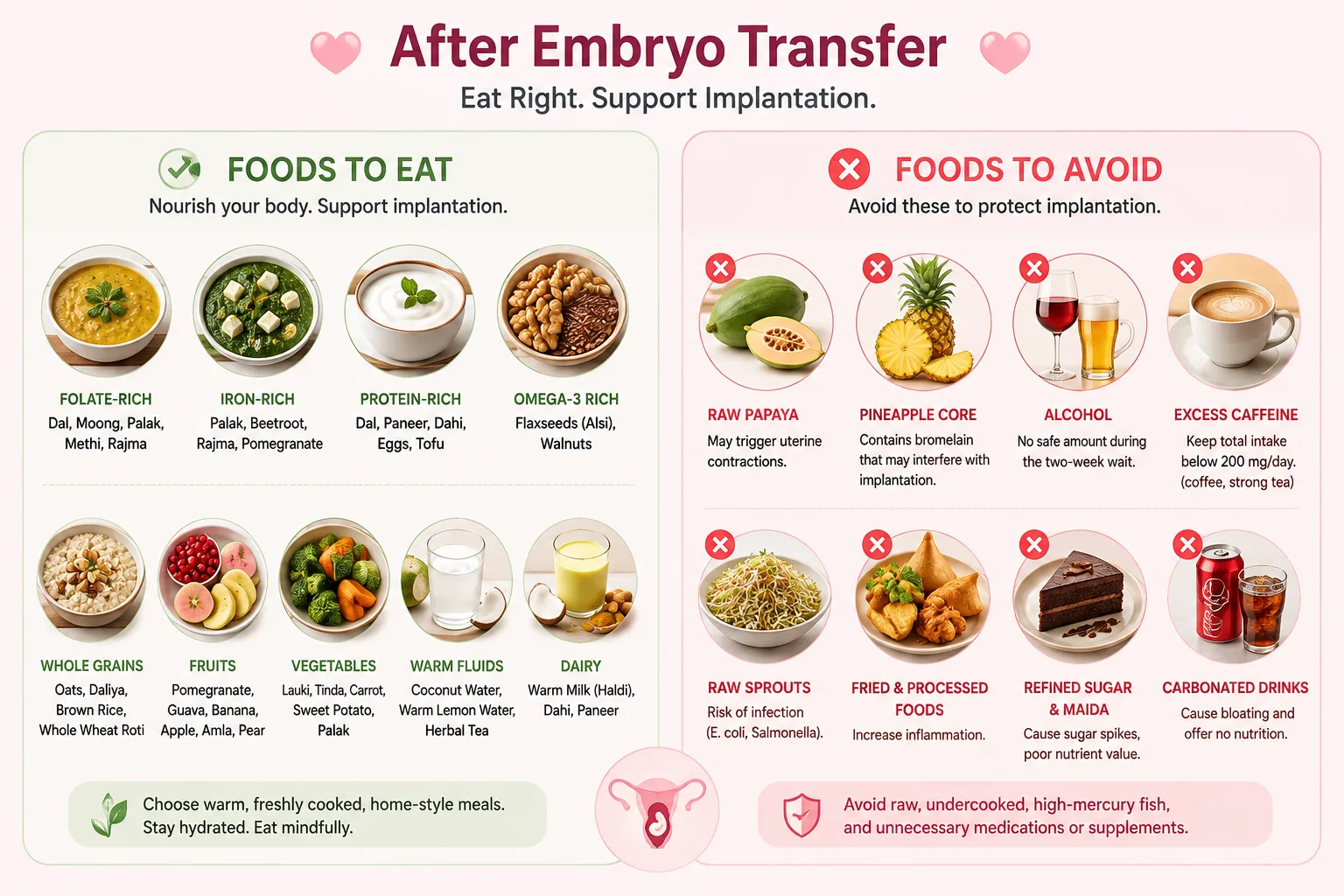
Foods to Eat After Embryo Transfer (Indian Diet)
Here is a clean reference of the best food to eat after embryo transfer, organised by food group. These are the foods we recommend to every patient in our post-transfer counselling session.
| Food Group | Best Indian Options | Why It Helps |
| Whole grains | Roti (wheat/multigrain), brown rice, oats, daliya | Steady energy, fibre, B-vitamins; avoids blood sugar spikes |
| Lentils & legumes | Moong dal, masoor, rajma, chana | High protein + folate; easy to digest |
| Dairy | Dahi, paneer, warm milk with turmeric | Calcium, protein, probiotics for gut health |
| Vegetables | Palak, lauki, tinda, sweet potato, carrot | Iron, folate, antioxidants, fibre |
| Fruits | Pomegranate, banana, apple, guava, amla, pear | Vitamin C, iron, natural sugars, antioxidants |
| Healthy fats | Ghee (1 tsp/day), walnuts, flaxseeds, almonds | Omega-3s, fat-soluble vitamin absorption, uterine health |
| Warm fluids | Coconut water, warm lemon water, ginger or chamomile tea | Hydration, electrolytes, gentle anti-inflammatory effect |
5-Day Indian Diet Chart After Embryo Transfer
Here is a practical, easy-to-follow 5-day after embryo transfer diet chart – designed specifically for the post-transfer window. Every meal is warm, digestible, and built around the nutrients your body needs most right now. Unlike a general IVF diet chart, this plan is designed specifically for the two-week wait: no stimulation-phase foods, no retrieval-recovery focus – just implantation support, meal by meal.
| Day | Breakfast | Mid-Morning | Lunch | Evening Snack | Dinner |
| Day 1 | Daliya with milk + 6 soaked almonds | Coconut water + 4 walnuts | Moong dal khichdi + curd + cucumber salad | Warm turmeric milk | Palak paneer + 2 rotis + salad |
| Day 2 | Poha with peas & lemon + warm ginger tea | Pomegranate juice (fresh) | Rajma chawal (small portion) + raita + salad | Apple + 4 almonds | Vegetable dal soup + 2 rotis |
| Day 3 | Vegetable oats upma + warm milk | Banana + 4 soaked walnuts | Moong dal + steamed lauki sabzi + brown rice | Guava + herbal chamomile tea | Paneer bhurji + 2 rotis + salad |
| Day 4 | Methi paratha (1) + curd | Coconut water | Chana dal + roti + carrot sabzi + salad | Amla juice + 4 almonds | Khichdi + curd + steamed vegetables |
| Day 5 | Idli (2) + sambar + coconut chutney | Warm lemon water + 4 walnuts | Palak dal + brown rice + raita | Banana + warm milk | Vegetable soup + 2 rotis + paneer salad |
Keep meals warm and freshly cooked where possible. Avoid refrigerated leftovers more than a day old – food safety matters especially during the two-week wait.
Foods and Drinks to Avoid After Embryo Transfer
This is the part patients find most confusing – there’s a lot of conflicting advice online. Here is what we actually tell our patients, and why, specifically in the context of the post-transfer period. When patients ask about IVF foods to avoid, the list below is what we hand them on the day of transfer.
| What to Avoid | Why |
| Raw/unripe papaya | Contains papain, an enzyme that can stimulate uterine contractions – a real risk in the implantation window |
| Pineapple core in large amounts | The core contains concentrated bromelain, which may interfere with implantation; a few slices of the flesh are generally fine |
| Alcohol | Directly harmful to embryo development; no safe threshold exists during this period |
| Caffeine – coffee, strong tea | Keep total intake below 200 mg/day; excess caffeine has been linked to implantation failure and early pregnancy loss |
| Raw or undercooked eggs/meat | Infection risk (Salmonella, Listeria) that could threaten an early pregnancy |
| Processed & fried foods | Promote systemic inflammation, which is the opposite of what the uterus needs right now |
| Refined sugar & maida | Cause blood sugar spikes, poor nutrient density, and may worsen hormonal balance |
| Carbonated drinks | Cause bloating and discomfort; offer zero nutritional value |
| High-mercury fish – swordfish, king mackerel | Mercury accumulates and is toxic to developing embryos; avoid entirely |
What to Eat After Egg Retrieval (Before Transfer)
If you’ve just had your egg retrieval and are waiting for the transfer, the dietary focus is slightly different. The retrieval procedure is minor but real – your ovaries need a few days to recover. Prioritise high-protein, anti-inflammatory foods: dal khichdi, eggs (fully cooked), paneer, dahi, and warm soups. Avoid anything that causes bloating – heavy legumes, carbonated drinks, raw salads – because your abdomen is already tender. If your doctor has flagged an OHSS risk, follow their specific fluid and sodium guidance closely; OHSS can worsen quickly if you’re not careful. Once you’re past the retrieval recovery and moving toward transfer day, the post-transfer diet above takes over completely.
Vegetables to Avoid After Embryo Transfer
Not all vegetables are safe during the two-week wait. Here’s what to skip:
- Raw/unripe papaya – technically a fruit but used as a vegetable in Indian cooking (raw papaya sabzi, salads). Papain in unripe papaya can trigger uterine contractions. Avoid entirely.
- Raw sprouts – moong sprouts, mixed sprouts, and alfalfa sprouts carry a genuine infection risk (E. coli, Salmonella). Cook them thoroughly or skip them during this period.
- Excess raw salads with unwashed greens – raw leafy greens that aren’t washed carefully can harbour bacteria. Prefer lightly steamed or sautéed greens during the two-week wait.
- Raw bitter gourd (karela) in large amounts – bitter gourd has traditional uses as a uterine stimulant in Ayurvedic practice; large raw quantities are best avoided, though small cooked portions are generally considered safe.
Fruits to Avoid After Embryo Transfer
- Raw/unripe papaya – the most important one; avoid completely.
- Pineapple core – bromelain concentration is highest in the core; the flesh in small amounts is generally fine.
- Grapes in very large quantities – resveratrol in high doses is a theoretical concern; a small portion is fine.
- Unwashed or imported berries – food safety, not the fruit itself; wash everything thoroughly.
The rest – pomegranate, apple, banana, guava, amla, pear, mosambi – are actively encouraged.
Lifestyle Tips to Support Implantation
Diet is only part of the picture. In our experience across 6,000+ IVF cycles, the patients who do best during the two-week wait are the ones who combine good nutrition with calm, consistent daily habits.
- Rest, but don’t be bedridden. Gentle walking for 15–20 minutes a day is perfectly fine – and actually supports circulation to the uterus. Complete bed rest is not recommended.
- Stay hydrated: 8–10 glasses of water or coconut water daily. Dehydration affects blood flow to the endometrium.
- Avoid hot baths, saunas, or anything that raises your core body temperature – heat stress is not what you want during implantation.
- Manage stress actively: light meditation, slow deep breathing, or gentle yoga (no inversions, no twists) can meaningfully lower cortisol levels.
- Take your prescribed progesterone and folic acid supplements without fail. Progesterone support is clinically essential during the luteal phase after a transfer – it maintains the uterine lining until the placenta can take over. Missing even one dose matters.
- Sleep 7–8 hours. Poor sleep raises cortisol, which can negatively affect implantation. A consistent bedtime routine helps.
Why Choose Mediworld Fertility for IVF in Delhi?
If you are already in your two-week wait, you have done the hard part. But it’s also natural – and wise – to think about what comes next: your results, your next steps, and whether the team around you is truly equipped to support you through all of it.
Here is what our patients at Mediworld Fertility experience:
- 21+ years of experience and 6,000+ IVF cycles – Dr. Neha Gupta and our team are among Delhi NCR‘s most experienced in assisted reproduction, with a depth of clinical exposure that genuinely matters when cycles get complex.
- Personalised care from day one: every patient receives a tailored diet and lifestyle protocol from transfer day – not a generic printout. This guide is a sample of what our patients actually receive.
- Advanced embryology lab: we use time-lapse incubators for continuous embryo monitoring and vitrification (fast-freeze) for embryo storage – both proven to improve embryo quality and survival rates compared to older methods.
- Transparent success rates: before treatment begins, we share real, cycle-specific outcome data with every patient. No vague statistics, no marketing numbers.
- Holistic support throughout the two-week wait: dedicated counsellors, in-house nutritionists, and a post-transfer care team are available throughout – patients are never left to navigate this period alone.
- Convenient Delhi NCR location: easily accessible for patients from Gurgaon, Noida, Faridabad, and across Delhi.
If you are in your two-week wait or planning your IVF cycle, our team is here – book a consultation with Dr. Neha Gupta at Mediworld Fertility, Delhi.
Frequently Asked Questions
Can I eat eggs after embryo transfer? expand_more
Yes - fully cooked eggs are an excellent source of protein, choline, and vitamin D, all of which support early embryo development. What you must avoid is raw or half-cooked eggs (runny yolks, raw batter) due to the risk of Salmonella infection.
Is it safe to eat pineapple after embryo transfer? expand_more
The concern is specifically about the core, which contains concentrated bromelain. A few slices of regular pineapple flesh are generally considered safe. We advise against eating large amounts of the core or taking bromelain supplements during this period.
Can I drink coconut water after embryo transfer? expand_more
Absolutely - we actively recommend it. Coconut water is one of the best natural hydration sources, rich in electrolytes like potassium and magnesium. It's gentle on the stomach and far better than sugary drinks or sodas.
What fruits are best after embryo transfer? expand_more
The best fruits to eat after embryo transfer are: pomegranate (iron + antioxidants), apple (fibre + vitamin C), banana (potassium + energy), guava (very high vitamin C), amla (exceptional vitamin C + antioxidants), pear (gentle fibre), and sweet lime/mosambi (hydration + vitamin C). These are the fruits we specifically recommend in our post-transfer diet counselling.
Should I eat ghee after embryo transfer? expand_more
Yes - 1 teaspoon of pure desi ghee per day is beneficial. Ghee supports digestion, helps absorb fat-soluble vitamins (A, D, E, K), and has a gentle anti-inflammatory effect in traditional Indian dietary practice. Don't overdo it, but don't avoid it either.
What vegetables should I avoid after embryo transfer? expand_more
The key vegetables to avoid after embryo transfer are: raw/unripe papaya (used as a vegetable in Indian cooking), raw sprouts (infection risk), large amounts of raw bitter gourd, and any unwashed raw greens. Prefer lightly cooked vegetables throughout the two-week wait.
Where to book embryo transfer in Delhi? expand_more
You can book embryo transfer in Mediworld Fertility, one of Delhi NCR's most established IVF centres with 21+ years of experience and 6,000+ cycles. Led by Dr. Neha Gupta, Mediworld Fertility offers personalised post-transfer care, advanced embryology labs with time-lapse incubators, and a dedicated support team throughout your two-week wait. The clinic is easily accessible from Gurgaon, Noida, Faridabad, and across Delhi. To get started, book a consultation with Dr. Neha Gupta at Mediworld Fertility, Delhi.